Totalling or Totaling: British and American English
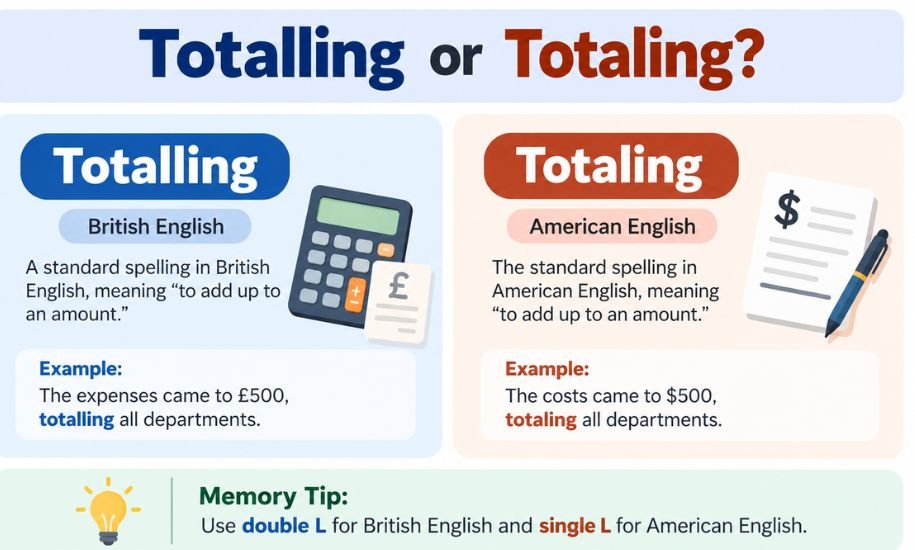
If you are unsure whether to write totalling or totaling, the good news is that both forms are correct. The difference is mainly based on regional English conventions: totalling is the standard British English spelling, while totaling is the standard American English spelling. They have the same meaning and grammatical function, so the choice depends on which variety of English you are following. Oxford lists totalling as the regular -ing form and totaling as the US English form.
Both “totalling” and “totaling” are correct. Use totalling in British English and totaling in American English. Both are forms of the verb total and mean adding amounts together or reaching a particular total.
Totalling or Totaling: What’s the Difference?
The difference is spelling, not meaning.
| Feature | Totalling | Totaling |
|---|---|---|
| Standard variety | British English | American English |
| Spelling | Double l | Single l |
| Base verb | total | total |
| Meaning | Adding or reaching a total | Adding or reaching a total |
| Past form | totalled | totaled |
| -ing form | totalling | totaling |
| Correct? | Yes | Yes |
Oxford’s dictionary entry for total gives totalling as the -ing form and identifies totaling specifically as the US English form. The two forms also have the same pronunciation.
So, if you are writing for a British audience, totalling is the natural choice. If you are following American English, choose totaling.
What Does “Totalling” Mean?
Totalling is the British English spelling of the present participle or gerund form of total.
As a verb, total can mean to add numbers or amounts together to calculate a final figure. It can also mean to reach a particular total. Oxford gives both of these uses in its dictionary entry.
For example:
- The expenses are totalling £2,500.
- The donations are totalling more than £10,000.
- She is totalling the figures before preparing the report.
- The invoices, totalling £4,800, were submitted yesterday.
In each example, the word refers to adding or reaching an amount.
Is “Totalling” a Correct Spelling?
Yes. Totalling is a completely correct English spelling. It is not a misspelling of totaling.
Oxford explicitly lists totalling as the standard -ing form of total.
For example:
The repair costs are totalling £6,000.
This is perfectly appropriate in British English.
What Does “Totaling” Mean?
Totaling is the American English spelling of the same form.
It has the same meaning as totalling: adding figures, amounts, quantities, or other values together, or reaching a particular total. Oxford’s American English dictionary lists totaling as the -ing form.
Examples include:
- The expenses are totaling $2,500.
- The donations are totaling more than $10,000.
- She is totaling the figures now.
- The invoices, totaling $4,800, were submitted yesterday.
There is no difference in meaning between these examples and their British counterparts.
Why Are These Two Spellings Confused?
The confusion comes from the different spelling conventions used in British and American English.
British English commonly retains the doubled l in this form:
- totalled
- totalling
American English generally uses one l:
- totaled
- totaling
The same regional distinction can be seen in other words, such as:
- travelled / traveled
- labelled / labeled
- cancelled / canceled
- modelling / modeling
The exact spelling patterns vary from word to word, so it is best to learn the established form for each word rather than applying a rule mechanically.
With total, however, the dictionary distinction is straightforward: totalling is British English, while totaling is American English.
Totalling or Totaling in British English
If your writing follows British English conventions, use totalling.
For example:
The company’s expenses are totalling £75,000 this year.
The five payments are totalling almost £3,000.
The accountant spent the afternoon totalling the figures.
This spelling is also suitable for publications and documents that follow British-style spelling conventions.
If the rest of your writing uses forms such as colour, travelled, labelled, and cancelled, then totalling will usually fit that style.
Totalling or Totaling in American English
For American English, use totaling.
Examples:
The company’s expenses are totaling $75,000 this year.
The five payments are totaling almost $3,000.
The accountant spent the afternoon totaling the figures.
American English uses the related past-tense form totaled as well. Oxford’s American English entry gives totaled and totaling as the usual American forms.
A document using color, traveled, labeled, and canceled would generally also use totaling.
Examples of Both Forms in Sentences
Seeing the forms side by side makes the distinction easier to remember.
British English
- The orders are totalling £12,000.
- The expenses are totalling more than £800.
- She is totalling the scores for each team.
- The payments, totalling £5,500, arrived yesterday.
- The company’s annual costs are totalling several million pounds.
American English
- The orders are totaling $12,000.
- The expenses are totaling more than $800.
- She is totaling the scores for each team.
- The payments, totaling $5,500, arrived yesterday.
- The company’s annual costs are totaling several million dollars.
Notice that the sentence structure and meaning do not change. Only the spelling convention changes.
Total, Totalled, and Totaling: The Related Forms
Understanding the other forms of the verb makes the spelling easier to remember.
| Form | British English | American English |
|---|---|---|
| Base form | total | total |
| Third-person singular | totals | totals |
| Past tense | totalled | totaled |
| Past participle | totalled | totaled |
| -ing form | totalling | totaling |
For example:
British English:
The expenses totalled £4,000.
The expenses are totalling £4,000.
American English:
The expenses totaled $4,000.
The expenses are totaling $4,000.
Oxford confirms these corresponding forms in its dictionary entry.
Does the Spelling Change the Meaning?
No.
Totalling and totaling have the same core meaning. You should not choose one because you think it describes a different mathematical process.
Compare:
The costs are totalling £900.
and:
The costs are totaling $900.
Both sentences say that the costs add up to the stated amount.
The only difference is the regional spelling convention.
There is, however, another meaning of the verb total worth knowing. In informal North American English, to total a car can mean to damage it so severely that it is not worth repairing. Oxford identifies this as especially North American usage.
For example:
The accident totaled his car.
The spelling in American English is totaled. In British English, the corresponding form is generally totalled, although the vehicle-damage sense is particularly associated with North American English.
Totalling or Totaling Pronunciation
The spelling difference does not normally create a difference in pronunciation.
Oxford gives the -ing form with the pronunciation /ˈtəʊtlɪŋ/ in its British-oriented entry, while the American form represents the same basic spoken form.
So the extra l in totalling is a written distinction rather than a reason to pronounce the word differently.
Common Mistakes
Mistake 1: Calling “totalling” incorrect
Some writers who are accustomed to American English may assume that the extra l is a spelling mistake.
It is not.
Totalling is standard British English.
Mistake 2: Calling “totaling” incorrect
The reverse mistake is also possible. A British English writer may see totaling and assume someone omitted an l.
Again, that is not necessarily an error. Totaling is standard American English.
Mistake 3: Assuming the words have different meanings
They do not. Both forms can describe adding amounts together or reaching a total.
Mistake 4: Mixing regional spelling unnecessarily
A document can be understood perfectly well with mixed spelling, but maintaining a consistent variety of English generally makes writing look more polished.
For example, if your document uses:
colour, travelled, labelled
then totalling is consistent with that British style.
If it uses:
color, traveled, labeled
then totaling fits the American style.
An Easy Way to Remember
A simple memory aid is:
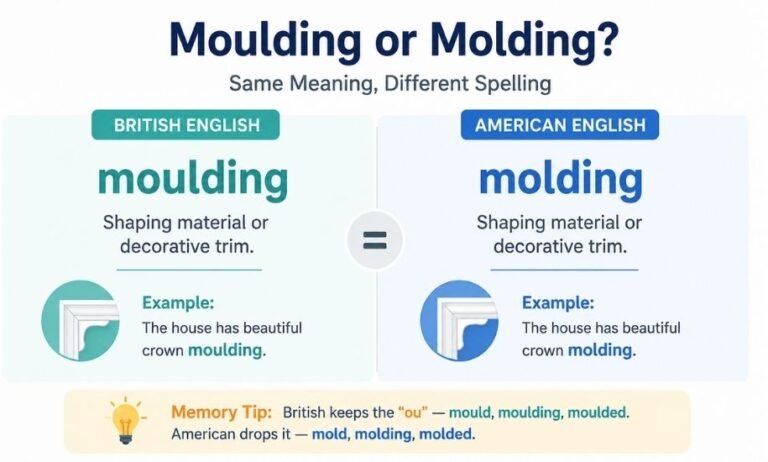
British English → double L: totalling
American English → single L: totaling
You can also remember the related past forms:
- British: totalled → totalling
- American: totaled → totaling
The most important thing is not to memorize one form as “right” and the other as “wrong.” Instead, associate each spelling with the English variety it represents.
Which Form Should You Use?
Choose according to your intended audience and the spelling system used throughout your writing.
If you are writing for a UK audience or using British English, choose totalling.
If you are writing for a US audience or using American English, choose totaling.
If you are unsure which style to use, consistency is more important than treating one form as universally correct. Pick the English variety appropriate for your publication and use its spelling conventions throughout the document.
Frequently Asked Questions
Is “totalling” a correct word?
Yes. Totalling is the standard British English -ing form of total. It means adding amounts or figures together, or reaching a particular total. It is not a misspelling of totaling.
Is “totaling” correct in English?
Yes. Totaling is the standard American English spelling of the -ing form of total. It has the same meaning as British English totalling.
Which is correct: totalling or totaling?
Both are correct. Use totalling for British English and totaling for American English. The distinction is primarily regional spelling rather than grammar or meaning.
Is “totalling” British or American?
Totalling is the British English form. American English generally uses totaling, with one l. Oxford specifically identifies totaling as the US English -ing form.
Is “totaling” American English?
Yes. Totaling is the usual American English spelling. Its British English counterpart is totalling.
Should formal writing use “totalling” or “totaling”?
Either can be appropriate in formal writing. The choice depends on your English variety. Use totalling in British English and totaling in American English, and keep your spelling consistent throughout the document.
The Bottom Line
Both totalling and totaling are legitimate English forms. Totalling is the standard British spelling, while totaling is the standard American spelling. Neither is a universal misspelling, and neither changes the basic meaning of the verb.
When choosing between them, focus on your audience and stay consistent with the rest of your writing. That simple approach will help you know the difference and use the right words, exactly as Grammarifyr aims to do.
You may also Read : Labeller or Labeler: US and UK Spelling Explained