Uber or Lyft: Which Is Better for Riders and Drivers?
Choosing between Uber and Lyft is not always as simple as picking the cheaper app. Prices, driver availability, ride options, incentives, and features can vary by city and even from one trip to the next. Drivers face a similar choice because earnings depend on demand, trip length, incentives, expenses, and local conditions. Seniors may also have different priorities from everyday riders. So, is one service clearly better? Not necessarily. The right choice depends on what you value most.
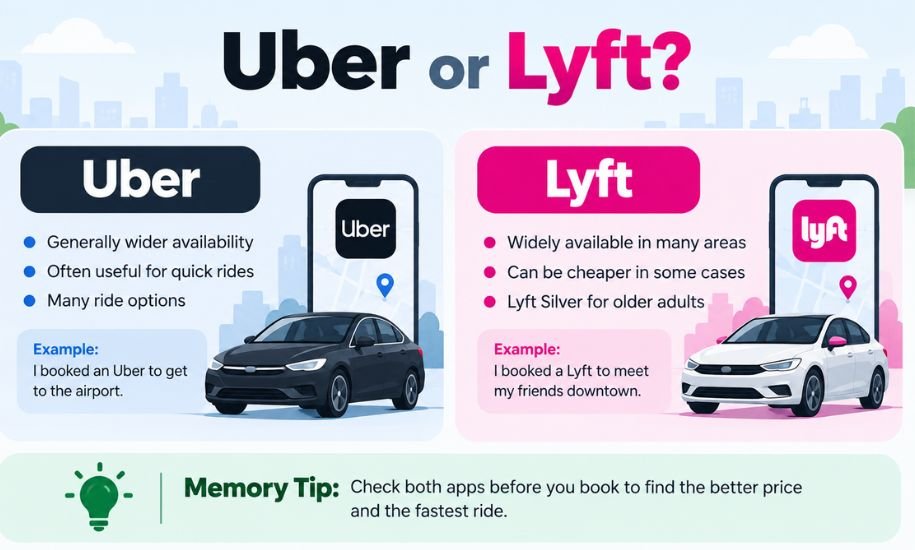
Both Uber and Lyft are useful rideshare services, but neither is always the better option. Uber generally has an advantage in overall scale and availability, while Lyft can be attractive for certain riders, including older adults, and may offer better prices or driver opportunities in particular markets. For the best deal, compare the two when both are available.
Uber vs. Lyft at a Glance
Both companies connect riders with drivers through smartphone apps, but their strengths can differ depending on location and circumstances.
| Feature | Uber | Lyft |
|---|---|---|
| Overall availability | Generally extensive | Extensive, but varies by market |
| Pricing | Changes with demand and location | Changes with demand and location |
| Driver earnings | Market-dependent | Market-dependent |
| Safety features | Extensive | Extensive |
| Senior-focused options | Senior accounts available | Lyft Silver |
| Larger vehicles | Available in many markets | Available in many markets |
| Premium rides | Available | Available |
| Best strategy for drivers | Can be used alongside Lyft | Can be used alongside Uber |
The most important point is that there is no permanent winner. A service that is cheaper or faster today may not be the same one tomorrow.
Which Is Better for Riders?
For passengers, the biggest factors are usually price, pickup time, availability, vehicle choice, and safety features.
Uber has a large presence and can be particularly useful when you need a ride quickly or are traveling in a market where it has a strong driver network. Lyft is also widely available in the United States and offers several ride categories depending on location.
Pricing is one area where comparing the apps makes sense. Both platforms adjust prices according to factors such as demand, location, trip characteristics, and driver availability. A busy event, airport rush, or bad-weather period can cause prices to change quickly.
For that reason, it is difficult to say that one company is always cheaper.
A practical approach
Before confirming a ride, check:
- The total fare.
- Estimated pickup time.
- The type of vehicle offered.
- Any available lower-cost or flexible options.
- Whether the price changes after waiting a few minutes.
If one app is significantly more expensive, the alternative may be the better choice for that particular journey.
Which Pays Drivers Better?
The answer depends heavily on where the driver works and how they drive.
Neither platform guarantees that its drivers will consistently earn more than drivers on the other service. Gross earnings can be influenced by:
- Number of trips accepted
- Distance and duration
- Demand
- Incentives
- Tips
- Surge or busy-period pricing
- Pickup distance
- Hours worked
- Vehicle expenses
A driver earning more per trip may not necessarily make more money overall if those trips involve long unpaid pickup distances or expensive fuel consumption.
Uber provides upfront trip information in many markets, allowing drivers to see important details before accepting a trip. Lyft also uses upfront pay in most markets, showing drivers information such as the route and expected earnings.
This makes the comparison more useful at the individual-trip level than through a single nationwide claim about which company pays more.
Uber or Lyft for Drivers?
For someone considering becoming a rideshare driver, choosing only one platform may not always be the best strategy.
Many drivers use both services. They can compare available requests and decide which trip makes more sense based on the expected earnings, distance, destination, and current demand.
For example, imagine a driver receives two requests:
- Platform A offers $14 for a 25-minute trip with a long pickup.
- Platform B offers $13 for a 15-minute trip with a short pickup.
The second trip could potentially be more attractive despite its lower headline payment because the driver spends less time and distance getting to the passenger.
This is why net earnings per hour and per mile are more meaningful than simply asking which company pays better.
What drivers should compare
Drivers should consider:
- Gross pay
- Time spent on each trip
- Miles driven
- Fuel or charging costs
- Vehicle maintenance
- Insurance
- Taxes
- Bonuses and incentives
- Tips
- Unpaid travel between rides
A driver who tracks these figures for several weeks can make a much more informed decision than someone relying on another driver’s experience.
Which Is Safer?
It would be misleading to declare one platform universally safe and the other unsafe.
Both companies provide safety tools designed to help riders and drivers. Depending on the market and account, these can include identity and background checks, trip information, emergency assistance, location sharing, support systems, and other verification or monitoring features.
The rider also has an important role to play.
Before entering a vehicle, check that:
- The license plate matches the information in the app.
- The vehicle matches the displayed make and model.
- The driver’s name and photo correspond with the account.
- You are getting into the correct car.
- Your trip details are correct.
For additional peace of mind, riders can share trip information with someone they trust when the feature is available.
Safety should therefore be evaluated based on the specific features available in your location rather than a simple “Uber versus Lyft” label.
Which Is Better for Seniors?
Older adults may have different transportation needs from younger riders. A simple interface, reliable support, easy vehicle access, and the ability to involve family members can all be important.
Lyft has a particularly notable option called Lyft Silver, which was designed with older adults in mind. It provides a simplified experience and, depending on availability, options intended to make rides easier for seniors.
Uber has also developed senior-focused account features that can help older adults use the service independently or with assistance from family members.
So, which is better for seniors?
Lyft can have an advantage when the rider specifically wants a senior-focused experience, while Uber can also be a strong choice depending on local availability and the rider’s needs.
A senior who needs a wheelchair-accessible vehicle, assistance getting into a car, or a particular vehicle type should check exactly what is available in their area before booking.
Which Is More Popular?
Uber is generally the larger rideshare platform, particularly when considering its overall scale and international presence. Lyft remains a major competitor and has continued to grow its business.
Popularity, however, does not necessarily determine which app is best for an individual rider.
A smaller platform can sometimes offer a better price or shorter pickup time in a particular location. Similarly, a driver may find that one platform provides better opportunities during a specific shift.
Therefore, popularity is useful when considering overall reach, but it should not be the only factor in choosing a ride.
What Reddit Users Say About the Two Services
Online driver and rider discussions reveal an important pattern: experiences vary considerably by location.
Riders frequently discuss situations where one app offers a substantially lower fare than the other for a similar trip. Drivers also report differences in ride volume, incentives, surge pricing, customer demand, and earnings.
Some drivers prefer Uber because they receive more requests in their market. Others report better results with Lyft. Some use both and switch between them based on the available trips.
This variation is important because a driver’s experience in one city may tell you very little about what another driver will experience elsewhere.
The same applies to riders. A fare comparison made in one city should not be treated as proof that either company is always cheaper.
How to Decide Between Them
The best choice depends on your purpose.
If you are a rider
Compare the two apps when possible. Look at the final price, pickup time, vehicle type, and available features rather than automatically choosing the same service every time.
If you are a driver
Consider trying both platforms and recording your actual results. Calculate earnings after fuel, maintenance, insurance, and other driving expenses.
If you are a senior
Look closely at accessibility, ease of use, account-management options, customer support, and senior-focused features available in your location.
If price matters most
Check both apps before confirming the ride. Dynamic pricing means the cheaper option can change from one moment to another.
Common Mistakes When Comparing Uber and Lyft
Assuming one is always cheaper
Neither service is guaranteed to have the lowest price on every trip. Demand and driver availability can change fares.
Comparing gross driver income only
A driver making $25 per hour before expenses does not actually keep $25 per hour. Fuel, maintenance, insurance, depreciation, and taxes can significantly affect net income.
Treating Reddit experiences as universal
Online discussions are useful for understanding real-world experiences, but individual reports depend on city, time, vehicle, driving strategy, and personal circumstances.
Choosing based only on popularity
The larger platform may have more availability, but that does not guarantee the best fare or experience for every trip.
Ignoring the destination
Drivers should consider where a ride ends. A seemingly attractive fare may become less appealing if the destination leaves the driver far from areas with strong demand.
Easy Rule to Remember
For riders, remember:
Check both before you book.
For drivers:
Compare both before you commit.
That simple approach is more reliable than assuming one company always wins.
Frequently Asked Questions
Is Uber or Lyft cheaper?
Neither is consistently cheaper. Prices can change according to demand, location, traffic, availability, and other factors. Checking both apps before booking is the simplest way to find the better price for a particular trip.
Which is better for drivers, Uber or Lyft?
It depends on the driver’s location and circumstances. Ride volume, incentives, trip distances, tips, and expenses can all affect earnings. Many drivers find it useful to have access to both platforms.
Is Uber safer than Lyft?
Both platforms offer a range of safety features, but safety can depend on the market, specific ride, driver, and rider behavior. Always verify the vehicle and driver information before entering the car.
Which is better for seniors?
Lyft has a strong senior-focused offering through Lyft Silver, while Uber also provides senior-oriented account options. The better choice depends on the features and ride types available in the senior’s location.
Is Lyft more popular than Uber?
Uber is generally the larger rideshare platform, although Lyft remains a major competitor. Local popularity can vary, so availability in a particular city may be more important than overall company size.
Should drivers use both Uber and Lyft?
Using both can give drivers more opportunities and allow them to compare individual trip offers. However, drivers should consider their local rules, expenses, and the practical requirements of managing two platforms.
Final Verdict: Uber or Lyft?
There is no universal winner. Uber generally has an advantage in scale and broad availability, while Lyft can be especially appealing for riders who value its senior-focused options or find a better fare in their area. For drivers, local conditions matter far more than the brand name. The smartest approach is to compare actual prices and opportunities rather than assuming one service is always better. For clear explanations of confusing terms and everyday usage questions, Grammarifyr helps readers know the difference and use the right words.
You may also Read : Ya'll or Y'all: Meaning, Grammar and Examples