Burned or Burnt: Meaning and Usage Explained
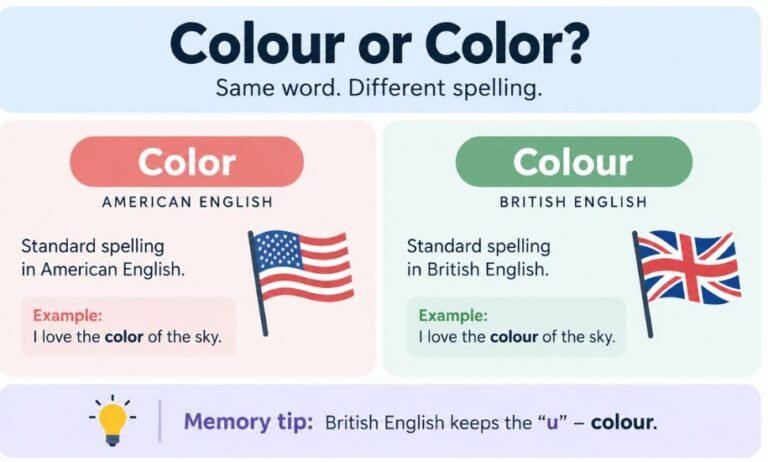
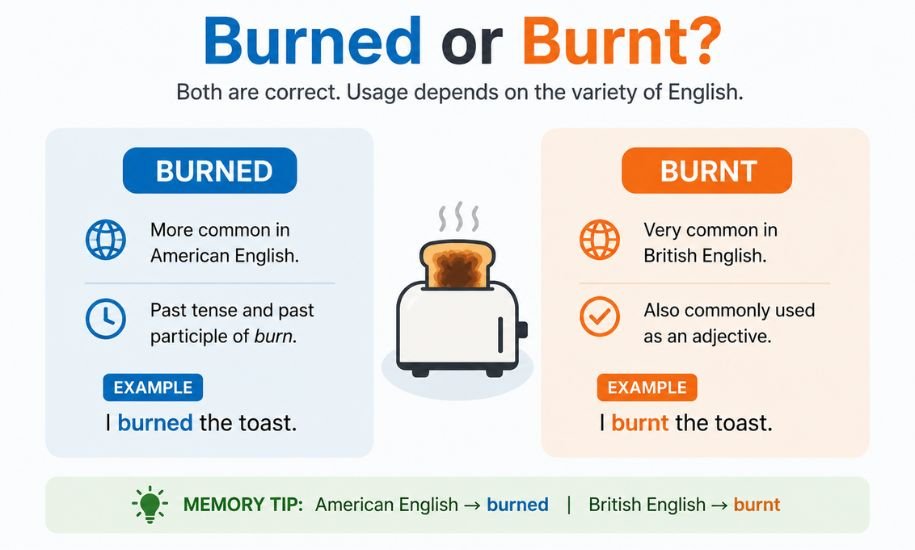
If you have ever hesitated over whether to write burned or burnt, you are not alone. Both forms come from the verb burn, and both are accepted in standard English. The difference is mainly regional: burned is the usual choice in American English, while burnt is especially common in British English. There is also a slight usage preference in some expressions, particularly when burnt works as an adjective, as in burnt toast. So which one should you use? It depends on your audience and the type of English you are following.
Burned and burnt are both correct forms of burn. Burned is generally preferred in American English, while burnt is very common in British English and is also well established in expressions such as burnt toast. Choose the form that matches the variety of English you are using and remain consistent.
Burned vs. Burnt at a Glance
| Feature | Burned | Burnt |
|---|---|---|
| Correct word? | Yes | Yes |
| Base verb | No | No |
| Past tense | Yes | Yes |
| Past participle | Yes | Yes |
| American English | More common | Also accepted |
| British English | Accepted | Very common |
| Adjective use | Yes | Especially common in some expressions |
The important point is that neither spelling is a misspelling. You can correctly say I burned the bread or I burnt the bread. The choice largely reflects regional convention.
What Does “Burned” Mean?
Burned is the past tense and past participle of burn. It describes something that was exposed to fire or excessive heat, or it can be used figuratively.
Examples:
- I burned the vegetables while answering the phone.
- The candle burned for several hours.
- She burned her hand on the hot pan.
- The old documents were burned.
In American English, burned is normally the safest default when you need the past form of burn.
It can also describe emotional or mental exhaustion when used in the expression burned out:
After months of overtime, Daniel felt completely burned out.
What Does “Burnt” Mean?
Burnt is also a past-tense and past-participle form of burn. It is particularly common in British English.
For example:
- I burnt the toast this morning.
- She burnt the old letters.
- The fire burnt through the wooden roof.
- He had burnt the vegetables before anyone noticed.
Burnt is also frequently used as an adjective:
- burnt toast
- burnt sugar
- burnt wood
- burnt offering
- burnt sienna
- burnt umber
This adjectival use is one reason you may encounter burnt even in American writing, where burned is generally more common as the verb form.
Why Are Both Forms Correct?
The verb burn belongs to a group of English verbs that can have alternative past forms. Instead of having just one universally fixed form, it developed both the -ed form burned and the shorter -t form burnt.
This does not mean the two forms have completely different meanings. In most ordinary contexts, they mean exactly the same thing.
Compare:
The chef burned the bread.
The chef burnt the bread.
The event described is the same. The difference is primarily one of regional preference and style.
American English
American writers generally favor:
The cookies burned in the oven.
British English
British writers commonly use:
The cookies burnt in the oven.
Neither sentence is grammatically wrong.
Burn or Burnt: What Is the Difference?
One important distinction is grammatical rather than regional.
Burn is the base or present form:
Be careful not to burn the cake.
Burned and burnt are past forms:
I burned the cake.
I burnt the cake.
So burn cannot simply be substituted for burnt in every sentence.
For example:
Correct: I don’t want to burn the toast.
Correct: I burned the toast.
Correct: I burnt the toast.
Incorrect: Yesterday, I burn the toast.
The tense of the sentence determines which form you need.
Burned Out or Burnt Out?
Both burned out and burnt out are correct.
The phrase burn out can describe becoming extremely tired or exhausted, usually because of prolonged stress, work, or effort. It can also describe something that stops functioning because of excessive use.
Examples:
I’m feeling burned out after working long hours all month.
I’m feeling burnt out after working long hours all month.
The motor burned out during the repair.
The motor burnt out during the repair.
American English tends to favor burned out, while burnt out is especially familiar in British English.
There is also a related noun:
Burnout can make it difficult to concentrate.
Here, burnout is one word because it is being used as a noun. Do not confuse it with the two-word forms burned out and burnt out.
Burned-out and burnt-out before a noun
When the expression functions as a compound adjective before a noun, it is commonly hyphenated:
a burned-out employee
a burnt-out employee
The same regional preference applies: burned-out is more typical of American English, while burnt-out is common in British English.
How to Choose the Right Form
Your choice should mainly depend on the variety of English you are writing.
Use “burned” as your default when:
- You are writing primarily for an American audience.
- You want the most familiar American past-tense form.
- You are using burn as a verb in ordinary past-tense sentences.
For example:
The children burned the leaves in the backyard.
Use “burnt” when:
- You are following British English conventions.
- Your publication or audience normally uses British spelling and vocabulary.
- Burnt is the established adjective in a particular expression.
For example:
The restaurant served burnt sugar with the dessert.
The most important thing is consistency. If your article otherwise follows American English, switching randomly between burned and burnt can make the writing look inconsistent.
Common Mistakes to Avoid
1. Calling “burnt” incorrect
Burnt is not a spelling mistake. It is an established English form and is particularly common in British English.
2. Assuming “burned” is exclusively American
Although burned is strongly preferred in American English, it is not forbidden in British English. British speakers and writers can use both forms.
3. Treating “burnt” as only an adjective
Burnt can function as a past-tense or past-participle verb form:
She burnt the toast.
It is also widely used as an adjective:
She served burnt toast.
4. Confusing “burnt out” with “burnout”
Use burnt out or burned out when describing a state or condition:
I am burned out.
Use burnout as the noun:
Burnout affected his ability to work.
5. Mixing regional styles without a reason
Using both forms is not automatically grammatically wrong, but deliberate consistency usually makes formal writing clearer. If your publication uses American English, burned should generally be your default. If it uses British English, burnt is a natural choice.
Examples in Everyday Sentences
Here are some examples showing how the forms work naturally:
American English:
I burned the toast again.
British English:
I burnt the toast again.
Either form:
The candle had burned for three hours.
The candle had burnt for three hours.
Adjective:
The kitchen smelled strongly of burnt sugar.
American-style adjective:
The kitchen smelled strongly of burned sugar.
Burn out:
She was burned out after weeks of overtime.
British-style alternative:
She was burnt out after weeks of overtime.
These examples show why it is too simplistic to say that one form is always for verbs and the other is always for adjectives. Both forms have wider uses.
An Easy Way to Remember
Think of the choice this way:
American English → burned
British English → burnt is very common
Then remember that burnt has a particularly strong presence in familiar adjective expressions such as burnt toast and burnt sugar.
If you are unsure and your audience is American, burned is usually the safest choice.
Frequently Asked Questions
Is it burned or burnt?
Both are correct. Burned is generally preferred in American English, while burnt is especially common in British English. The two forms normally have the same meaning when used as past forms of burn.
Is “burnt” proper English?
Yes. Burnt is standard English and can function as the past tense and past participle of burn. It is particularly common in British English and is also frequently used as an adjective.
Is it “I burned” or “I burnt”?
Both are grammatically correct. I burned is the more typical American-English version, while I burnt is very natural in British English.
Is it burned out or burnt out?
Both expressions are correct. Burned out is generally more common in American English, while burnt out is especially common in British English.
Is “burnt out” one word?
No. As a verb phrase or adjective, it is normally written burnt out. The related noun is burnout, written as one word.
Which should I use in formal writing?
Follow the regional style of your audience or publication. For American English, choose burned as the normal past form. For British English, burnt is an entirely appropriate choice. Consistency matters more than choosing one form as universally “correct.”
The Bottom Line
Burned and burnt are both correct. Burned is the usual past form in American English, while burnt is particularly common in British English and remains well established in adjective phrases. The same distinction applies to burned out and burnt out. When in doubt, choose the form that matches your intended variety of English and use it consistently. For more straightforward explanations of confusing English forms, Grammarify helps you know the difference and use the right words.
You may also Read : Towards or Toward: Meaning, Difference and Examples