Smelled or Smelt: Which Is Correct?
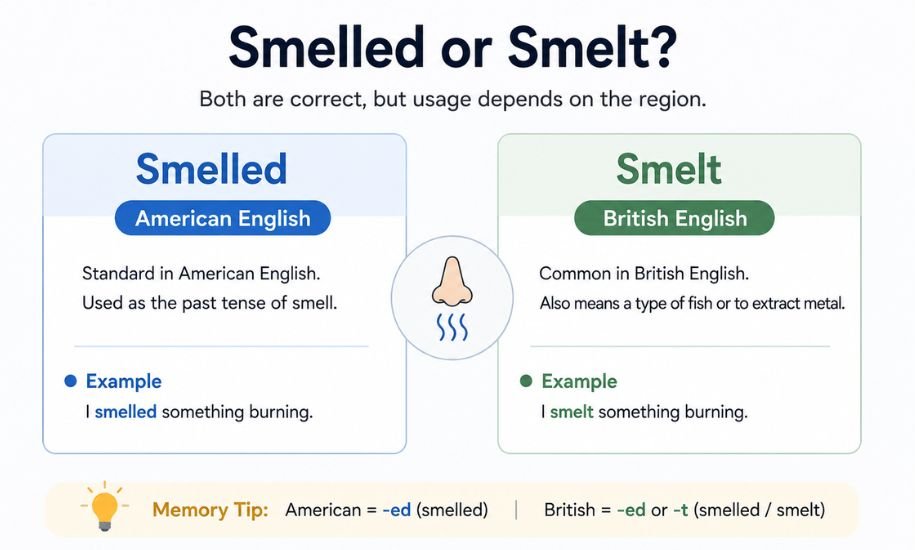
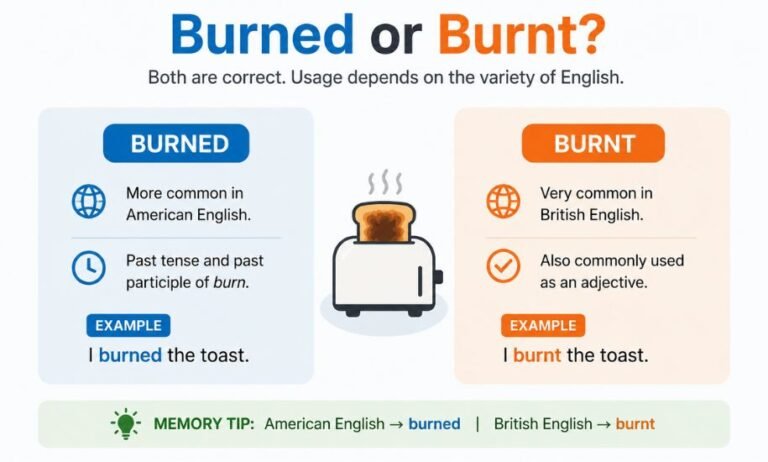
The past tense of smell can appear as either smelled or smelt, which can make this small grammar choice surprisingly confusing. The important point is that both forms are legitimate when they mean noticing or producing an odor, but their usage differs by region. Smelled is the usual form in American English, while British English commonly accepts both smelled and smelt.
Both smelled and smelt are correct past-tense forms of smell. Smelled is the standard choice in American English, while British English commonly uses either form. If you are writing for a general or American audience, smelled is usually the safest choice.
Smelled or Smelt: What’s the Difference?
The difference is mainly regional, not one of meaning.
| Form | Status | Typical usage |
|---|---|---|
| smelled | Correct | Standard in American English; also used in British English |
| smelt | Correct | Common in British English; also has other meanings |
| smell | Base form | Present tense and infinitive |
| smelled / smelt | Past tense | Used for something that happened in the past |
| smelled / smelt | Past participle | Used with forms such as has, have, and had |
Cambridge Dictionary lists smelled as the past tense and past participle, with smelt also used in UK English. Cambridge Grammar likewise notes that British English permits both the -ed and -t forms for verbs such as smell, whereas American English generally prefers the -ed ending.
Examples
- I smelled fresh bread coming from the kitchen.
- I smelt fresh bread coming from the kitchen.
- She smelled smoke before anyone else noticed it.
- She smelt smoke before anyone else noticed it.
The meaning remains essentially the same in these examples.
What Does “Smelled” Mean?
Smelled is the simple past form and past participle of smell. It can describe noticing an odor or having an identifiable odor.
For example:
- I smelled something burning.
- The kitchen smelled wonderful after dinner.
- He smelled the flowers before buying them.
- The old room smelled damp.
In American English, this is the normal form. Cambridge’s American English dictionary gives examples such as “She smelled something burning” and identifies smelled as the standard past form.
The verb smell has several related uses. You can smell something by detecting its scent, or something can smell a particular way:
I smelled smoke.
Here, the subject detects an odor.
The room smelled musty.
Here, the room has a particular odor.
What Does “Smelt” Mean?
Smelt has more than one use.
In British English, smelt can be the past tense and past participle of smell:
I smelt smoke coming from the garage.
She had smelt the perfume before.
Cambridge Dictionary specifically identifies smelt as the past simple and past participle of smell.
However, smelt is also an independent word. It can refer to a small fish, and to smelt can mean to extract metal from ore by heating it.
For example:
The fishermen caught several smelt.
Here, smelt is a noun referring to fish.
Or:
The workers smelted the ore.
Here, smelted is the past tense of the separate verb smelt, meaning to extract metal.
That distinction is important because not every occurrence of smelt is related to the verb smell.
Is It Smelled or Smelt in American English?
If you are following American English, choose smelled.
For example:
I smelled something strange in the hallway.
The cake smelled delicious.
We smelled smoke from outside.
American English generally prefers regular -ed forms for verbs like smell. Cambridge Grammar notes that British English can use either smelled or smelt, while American English prefers the -ed form.
Although an American reader can understand smelt when it is intended as the past of smell, it can sound distinctly British or be interpreted as the noun or metalworking verb.
So if your goal is straightforward American English, smelled is the better choice.
Is It Smelt or Smelled in British English?
In British English, both are acceptable.
You could write:
The house smelled of fresh paint.
Or:
The house smelt of fresh paint.
Both versions are grammatical. British English has a broader tradition of using -t endings in certain past-tense and past-participle forms, including smelt, learnt, and dreamt.
The choice can therefore depend on personal preference, style, and the variety of English being used.
If you are writing a British publication, using smelt is perfectly reasonable. Using smelled is not automatically wrong either.
“Smelled It” or “Smelt It”?
Both can be correct when the intended meaning is that someone detected the odor of something.
American English
I smelled it before I opened the package.
British English
I smelt it before I opened the package.
You can use the same pattern with other objects:
- She smelled it immediately.
- She smelt it immediately.
- Have you smelled it yet?
- Have you smelt it yet?
The important thing is to match the verb form with the grammar of the sentence and, when relevant, the variety of English you are using.
Be Careful With “Did You Smell”
One of the most useful grammar rules here is that did is followed by the base form of the verb.
Correct:
Did you smell that?
Incorrect:
Did you smelled that?
Incorrect:
Did you smelt that?
Why? Because did already carries the past-tense meaning. The main verb stays in its base form.
The same rule applies to negative sentences:
I didn’t smell anything.
Not:
I didn’t smelled anything.
And not:
I didn’t smelt anything.
This is different from a simple past sentence without did:
I smelled smoke.
or, in British English:
I smelt smoke.
This distinction prevents one of the most common grammatical mistakes involving these forms.
What About “Has Smelled” and “Has Smelt”?
Both forms can work when the verb is being used as a past participle.
American English:
She has smelled that perfume before.
British English:
She has smelt that perfume before.
You can also use had:
He had smelled the smoke earlier.
He had smelt the smoke earlier.
Again, the regional distinction remains the same: smelled is the standard American choice, while British English allows smelt as well.
Common Mistakes to Avoid
1. Treating “smelt” as universally incorrect
Smelt is not simply a misspelling of smelled. It is an established past form of smell, particularly in British English.
2. Treating “smelled” as wrong in British English
British English accepts smelled as well as smelt. The choice does not automatically make a sentence incorrect.
3. Writing “did smelled”
After did, use smell:
Correct: Did you smell the smoke?
Incorrect: Did you smelled the smoke?
4. Confusing “smelt” with “smelted”
When smelt means extracting metal, its past form is smelted:
The company smelted the metal.
But when smelt is the British past form of smell:
I smelt smoke.
5. Changing forms unnecessarily
If you are writing consistently in American English, stick with smelled. If you are writing British English, you can choose smelled or smelt, but consistency is helpful.
Easy Way to Remember the Difference
A simple rule works for most situations:
American English → smelled
British English → smelled or smelt
Think of smelt as the shorter British-style alternative to smelled when smell is being used as a verb.
For international writing where you do not need a specifically British style, smelled is generally the clearest choice.
Examples in Sentences
Here are some natural examples showing how the forms work:
American English
- I smelled coffee when I entered the room.
- She smelled something burning.
- The flowers smelled wonderful.
- We had smelled the odor before.
- Did you smell the smoke?
British English
- I smelt coffee when I entered the room.
- She smelt something burning.
- The flowers smelt wonderful.
- We had smelt the odor before.
- Did you smell the smoke?
Notice the final example. Even when using British English, did you smell is correct because did requires the base form smell.
Frequently Asked Questions
Is “smelled” or “smelt” correct?
Both are correct when they are past forms of the verb smell. Smelled is standard in American English, while British English commonly uses both smelled and smelt.
Is “smelt” British or American?
When smelt means the past tense of smell, it is especially associated with British English. American English normally uses smelled for this meaning. Smelt also exists in American English with other meanings, including a type of fish and the metalworking verb.
Should I write “I smelled it” or “I smelt it”?
Either can be correct depending on the variety of English. I smelled it is the usual American form. I smelt it is natural in British English.
Is “I didn’t smelt it” correct?
No. After didn’t, use the base form smell: I didn’t smell it. The same rule gives us Did you smell it?, not Did you smelled it? or Did you smelt it?
Is “smelt” a real word?
Yes. Smelt can be the British past tense and past participle of smell. It is also a noun for a type of fish and a verb meaning to extract metal from ore by heating it.
Which form should I use in formal writing?
Use smelled if you are following American English. In British English, both smelled and smelt are acceptable. The best choice is usually the one that matches the English variety and style used throughout your writing.
The Bottom Line
So, smelled or smelt? The answer is both, when they are past forms of smell. American English generally favors smelled, while British English allows smelled and smelt. Remember that after did or didn’t, you should use the base form smell, regardless of regional preference.
For clear, consistent word-choice guidance, Grammarifyr can help you make the right choice between easily confused English forms without overcomplicating the grammar.
You may also Read : OK or Okay: Which Is Correct? Meaning & Usage

One Comment