Beautiful Ways to Say Rest in Peace: Heartfelt & Meaningful Messages
Losing someone is never easy, and sometimes the familiar words “rest in peace” don’t quite express what you feel. There are many beautiful ways to say rest in peace that can sound more personal, comforting, and sincere. Whether you’re writing a sympathy card, funeral message, memorial tribute, or social media post, the right words can honor someone’s life while offering comfort to those left behind.
Beautiful Ways to Say Rest in Peace
There isn’t one perfect phrase for expressing sympathy. A short expression may be best for a memorial post, while a more personal message can be appropriate in a sympathy card or private conversation.
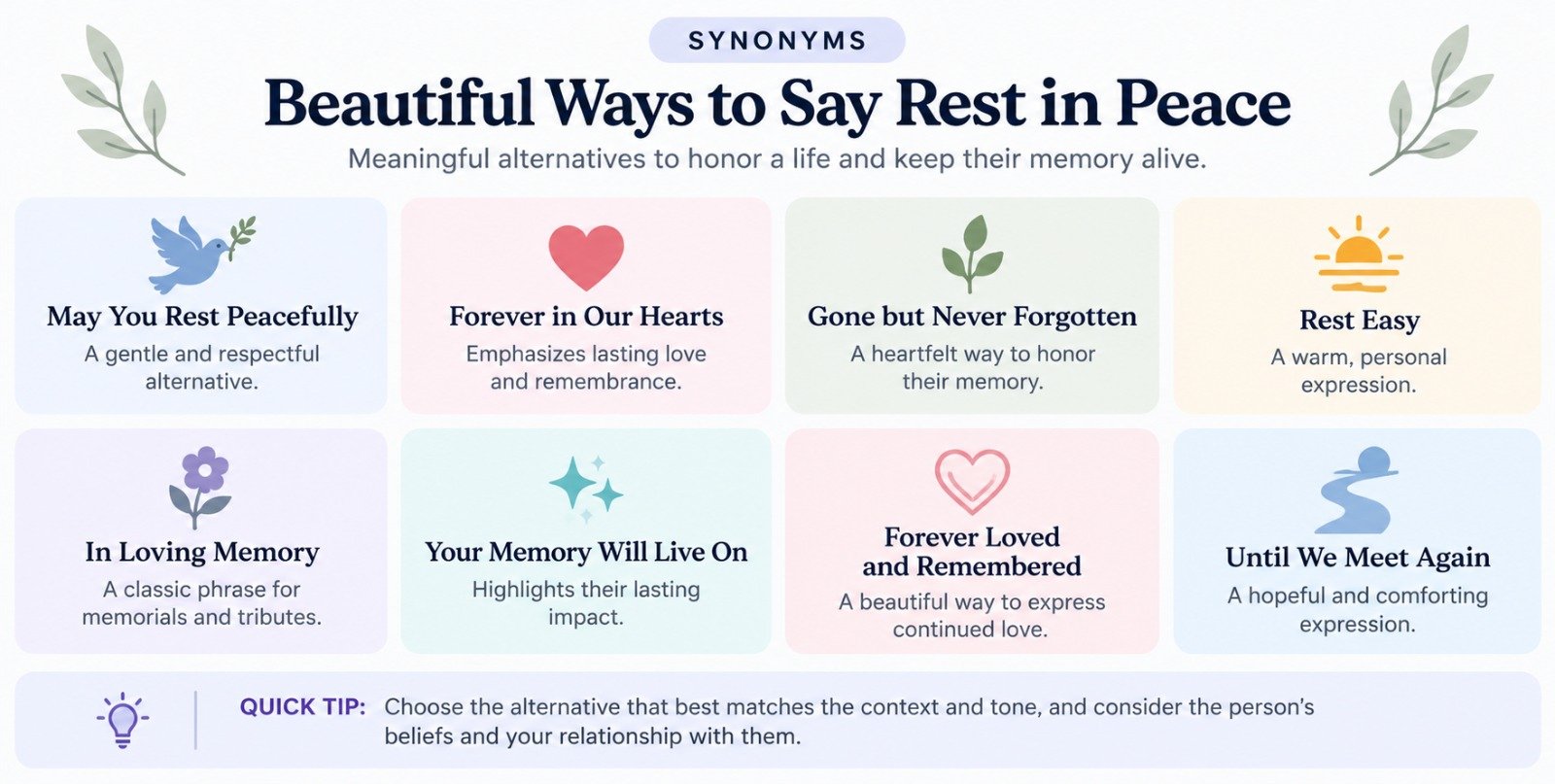
Here are some of the most natural and meaningful options:
| Expression | Tone | Best Used For | Example |
|---|---|---|---|
| May you rest peacefully | Gentle | General condolences | “May you rest peacefully and be remembered with love.” |
| Forever in our hearts | Loving | Close relationships | “You will be forever in our hearts.” |
| Gone but never forgotten | Heartfelt | Memorials | “Gone but never forgotten, your memory lives on.” |
| Rest easy | Warm | Friends and loved ones | “Rest easy, dear friend. You will be deeply missed.” |
| In loving memory | Respectful | Memorials and funerals | “In loving memory of someone who touched so many lives.” |
| Your memory will live on | Reflective | Tributes | “Your memory will live on through everyone who knew you.” |
| Forever loved and remembered | Affectionate | Family | “Forever loved and remembered by all who knew you.” |
| Until we meet again | Hopeful | Personal tributes | “Until we meet again, you will remain in my thoughts.” |
| May you find eternal peace | Spiritual | Faith-based settings | “May you find eternal peace and comfort.” |
| Remembered with love | Warm | Cards and memorials | “You will always be remembered with love.” |
These expressions are not all exact synonyms for “rest in peace.” For example, “forever in our hearts” focuses on remembrance, while “may you find eternal peace” has a more spiritual quality. That difference can make one phrase more suitable than another.
H3: May You Rest Peacefully
“May you rest peacefully” is one of the closest gentle alternatives to “rest in peace.” It keeps the focus on peace and rest without sounding overly formal.
Example:
“May you rest peacefully, surrounded by the love you gave to others.”
This works well for sympathy cards, memorial messages, and personal tributes.
H3: Forever in Our Hearts
“Forever in our hearts” emphasizes continuing love and remembrance rather than the person’s death itself.
Example:
“Your kindness touched so many lives. You will be forever in our hearts.”
It is especially appropriate when remembering a close friend, family member, or loved one.
H3: Gone but Never Forgotten
This familiar expression conveys the idea that although someone has passed away, their memory remains.
Example:
“Gone but never forgotten. Your beautiful memory will remain with us always.”
It works particularly well in memorial posts, funeral tributes, and remembrance messages.
H3: Rest Easy
“Rest easy” is shorter and somewhat more personal than “rest in peace.” It can feel especially natural when speaking about a friend or someone with whom you had a close relationship.
Example:
“Rest easy, my friend. Thank you for all the wonderful memories.”
Because it is relatively conversational, it may feel less suitable for highly formal funeral notices.
H3: In Loving Memory
“In loving memory” is a classic memorial expression. Rather than directly addressing the person, it honors their memory.
Example:
“In loving memory of a remarkable person whose kindness will never be forgotten.”
It is suitable for memorial pages, funeral programs, flowers, cards, and remembrance posts.
H3: Your Memory Will Live On
This phrase shifts attention from loss to the lasting influence someone had on others.
Example:
“Although you are no longer with us, your memory will live on in everyone who loved you.”
It can be particularly meaningful when the deceased left behind strong memories, lessons, or contributions.
H3: Forever Loved and Remembered
This is a warm choice when you want to emphasize both affection and remembrance.
Example:
“You will be forever loved and remembered by everyone whose life you touched.”
It works naturally in family tributes and sympathy messages.
H3: Until We Meet Again
“Until we meet again” expresses hope and continuing connection. It can carry a spiritual meaning, so consider the beliefs of the person and their family before using it.
Example:
“Until we meet again, I will treasure every memory we shared.”
H3: May You Find Eternal Peace
This has a distinctly spiritual tone and is more appropriate when a faith-based message fits the situation.
Example:
“May you find eternal peace, and may your loved ones find comfort in their memories of you.”
It should not automatically be used in every condolence message because references to eternity and spiritual beliefs may not suit everyone.
H3: Remembered With Love
“Remembered with love” is simple, gentle, and adaptable.
Example:
“You will always be remembered with love and gratitude.”
It can work in a sympathy card, memorial tribute, or short remembrance message.
H2: Heartfelt Ways to Say Rest in Peace
Sometimes a simple “RIP” feels too brief, especially when you knew the person well. A heartfelt message can acknowledge the person’s life and the impact they had.
H3: You Will Always Have a Place in Our Hearts
This is appropriate when the person was deeply loved.
Example:
“Though you are no longer beside us, you will always have a place in our hearts.”
H3: Your Kindness Will Never Be Forgotten
Use this when you want to remember a specific quality of the person.
Example:
“Your kindness, generosity, and warmth will never be forgotten.”
H3: Your Light Will Continue to Shine
This poetic expression suggests that someone’s influence continues through the people and memories they left behind.
Example:
“Your light will continue to shine through everyone whose life you touched.”
H3: Thank You for the Memories
This is especially personal when addressing a friend or loved one.
Example:
“Thank you for the laughter, friendship, and memories. You will always be missed.”
H3: Your Legacy Will Live On
This works particularly well when the person made a meaningful contribution to a family, community, profession, or cause.
Example:
“Your legacy will live on through the people you inspired.”
H2: Short and Beautiful Ways to Say Rest in Peace
When space is limited, a short message can still carry genuine emotion.
- Rest peacefully.
- Rest easy.
- Forever remembered.
- Forever loved.
- Never forgotten.
- In loving memory.
- Remembered with love.
- Always in our hearts.
- Your memory lives on.
- Peace be with you.
- Sleep peacefully.
- Until we meet again.
- Your light lives on.
- Loved beyond words.
- Gone from sight, never from our hearts.
For a public memorial post, “Forever in our hearts” or “Gone but never forgotten” may feel more personal than simply writing “RIP.”
H2: Poetic Ways to Say Rest in Peace
A poetic message can be appropriate for a memorial tribute, funeral card, or personal remembrance.
H3: May Your Journey Be Peaceful
A gentle metaphor that treats death as the end of one journey.
H3: May Peace Surround You Forever
This has a soft, comforting quality and works well in written tributes.
H3: Your Memory Will Bloom Forever
A more creative expression that suggests memories continue to grow and bring meaning.
H3: May You Rest Where Sorrow Cannot Reach You
This is more poetic and solemn, making it better suited to a personal tribute than an everyday condolence.
H3: Though You Are Gone, Your Love Remains
This focuses on the continuing emotional connection between the deceased and those who loved them.
H2: Beautiful Ways to Say Rest in Peace for a Friend
When a friend passes away, a message that acknowledges the friendship often feels more genuine than a generic condolence.
H3: Rest Easy, My Friend
“Rest easy, my friend. I will always be grateful for the memories we shared.”
H3: Your Friendship Will Never Be Forgotten
“Your friendship brought so much happiness into my life. It will never be forgotten.”
H3: Thank You for Being Part of My Life
“Thank you for being such an important part of my life. I will carry your memory with me always.”
H3: You Will Be Deeply Missed
“You will be deeply missed, but the memories of our friendship will stay with me forever.”
The most effective friend tribute usually includes something specific about the relationship rather than relying entirely on a stock phrase.
H2: Beautiful Ways to Say Rest in Peace for a Family Member
For a family member, more personal language is often appropriate.
H3: Forever in Our Family’s Hearts
“You will forever remain in our family’s hearts, and your memory will always be treasured.”
H3: Your Love Will Stay With Us
“Your love and guidance will stay with us for the rest of our lives.”
H3: We Will Carry Your Memory With Us
“Though we must say goodbye, we will carry your memory with us wherever life takes us.”
H3: Your Love Will Never Be Forgotten
“Your love shaped our lives in so many ways, and it will never be forgotten.”
When writing about a parent, grandparent, sibling, or another close relative, mentioning a specific memory, quality, or lesson can make the message much more meaningful.
H2: Spiritual Ways to Say Rest in Peace
Some families prefer language connected to faith or spirituality. In these situations, expressions about eternal peace, heaven, prayer, or God’s care may be appropriate.
Examples include:
- May you find eternal peace.
- May your soul rest peacefully.
- May you rest in God’s loving care.
- May you be welcomed into eternal peace.
- May heaven receive you with love.
- May God’s peace surround your loved ones.
- May your soul find everlasting peace.
Use religious wording thoughtfully. If you’re uncertain about someone’s beliefs, a neutral expression such as “May you rest peacefully” or “Forever in our hearts” is usually safer.
H2: Nonreligious Ways to Say Rest in Peace
Not every family wants religious language in a condolence message. Secular expressions can be equally warm and respectful.
Consider:
- May you rest peacefully.
- Forever in our hearts.
- Gone but never forgotten.
- Your memory will live on.
- Remembered with love.
- Your legacy will continue.
- You will always be remembered.
- Your kindness will live on.
- Your life made a difference.
- We will treasure your memory forever.
These options focus on memory, love, relationships, and legacy rather than religious beliefs.
H2: Beautiful Ways to Say Rest in Peace in a Sympathy Card
A sympathy card usually gives you more room to express yourself. Instead of stopping at “rest in peace,” combine remembrance with compassion for the grieving family.
For example:
“May you find comfort in the beautiful memories you shared, and may their loving spirit remain in your hearts forever.”
Or:
“Thinking of you during this difficult time. May the memories of a wonderful life bring you comfort and peace.”
Or:
“May the love they gave and the memories they created remain a source of comfort in the days ahead.”
These messages work because they recognize both the person who died and the people who are grieving.
H2: Beautiful Ways to Say Rest in Peace on Social Media
Social media tributes are usually brief, but they can still be sincere.
- “Forever in our hearts. Rest peacefully.”
- “Gone but never forgotten. Your memory will live on.”
- “Rest easy. You will be deeply missed.”
- “Remembered with love today and always.”
- “Your beautiful spirit will never be forgotten.”
- “Thank you for the memories. Rest peacefully.”
- “Your light will continue to shine.”
- “Forever loved, forever remembered.”
Avoid trying to make a public tribute overly elaborate. A few sincere words often feel more appropriate than a long message.
H2: How to Choose the Right Expression
The best alternative depends on who died, who you’re speaking to, and where the message will appear.
For a close friend: Choose something personal, such as “Rest easy, my friend” or “Thank you for the memories.”
For a family member: A loving expression such as “Forever in our hearts” may feel appropriate.
For a formal memorial: “In loving memory” or “Remembered with love” works well.
For a spiritual audience: “May you find eternal peace” may be suitable.
When you don’t know the family’s beliefs: Choose a neutral phrase such as “May you rest peacefully.”
For social media: Keep it brief and sincere.
The goal isn’t to find the fanciest expression. It’s to choose words that feel genuine and respectful for the particular loss.
Frequently Asked Questions
What is a beautiful way to say rest in peace?
Some beautiful alternatives include “May you rest peacefully,” “Forever in our hearts,” “Gone but never forgotten,” “Rest easy,” and “Your memory will live on.” The best choice depends on the relationship and setting.
What can I say instead of “rest in peace”?
You can say “Rest easy,” “In loving memory,” “Remembered with love,” “Forever in our hearts,” or “May you rest peacefully.” These expressions have slightly different emotional tones.
What is another way to say rest in peace for a friend?
For a friend, a personal expression such as “Rest easy, my friend,” “Your friendship will never be forgotten,” or “Thank you for all the memories” can sound more genuine than a formal memorial phrase.
What is a short message instead of RIP?
Short options include “Rest peacefully,” “Rest easy,” “Forever remembered,” “Never forgotten,” “In loving memory,” and “Always in our hearts.”
What is a poetic way to say rest in peace?
You could write “May peace surround you forever,” “Your light will continue to shine,” or “Though you are gone, your love remains.” Poetic wording is especially suitable for personal tributes and memorial messages.
What should I write in a sympathy card instead of rest in peace?
Try combining remembrance with comfort, such as: “May the beautiful memories you shared bring comfort during this difficult time.” This acknowledges the family’s grief rather than focusing only on the deceased.
Is “rest in peace” appropriate for everyone?
“Rest in peace” is widely understood and respectful, but some people prefer secular or faith-specific wording. If you don’t know the person’s beliefs, a neutral expression such as “Forever in our hearts” can be a considerate choice.
Conclusion
There are many beautiful ways to say rest in peace, but the most meaningful words are usually those that fit the person and the relationship. A short phrase like “Forever in our hearts” may be perfect for a memorial, while a close friend might deserve something more personal such as “Thank you for all the memories.” When faith is relevant, a spiritual expression can offer additional comfort; otherwise, remembrance-focused wording can keep the message warm and inclusive.
Choosing the right words during grief doesn’t require complicated language. Grammarifyr makes those subtle differences in wording easier to understand, so your message can be as respectful, compassionate, and sincere as the moment deserves.
You may also Read : Different Ways to Say Yes: 50+ Polite, Funny, Casual & Professional Alternatives