Smelt or Smelled? American vs. British English
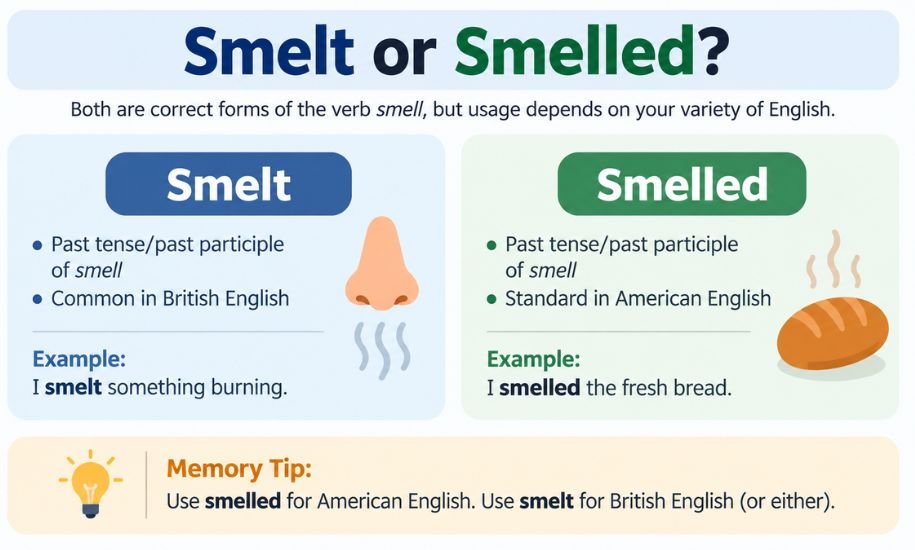
If you are unsure whether to write “smelt” or “smelled,” you are dealing with two legitimate forms of the verb smell. The choice is mainly a matter of regional English rather than a difference in basic meaning. Smelled is the usual form in American English, while smelt is especially common in British English, although British English also accepts smelled. Understanding this distinction helps you choose the form that fits your audience and avoid treating a valid regional form as a spelling mistake.
Both “smelt” and “smelled” are correct when they are forms of the verb smell. “Smelled” is generally preferred in American English, while “smelt” is common in British English. In this use, they normally have the same meaning.
Smelt or Smelled: What’s the Difference?
The basic difference is regional preference.
| Feature | Smelled | Smelt |
|---|---|---|
| Correct form of smell? | Yes | Yes |
| Basic meaning | Detected or perceived a scent | Detected or perceived a scent |
| American English | Standard and preferred | Less usual |
| British English | Correct | Common |
| Past tense | Yes | Yes |
| Past participle | Yes | Yes |
For example:
- I smelled smoke coming from the garage.
- I smelt smoke coming from the garage.
Both sentences can mean that the speaker detected the smell of smoke.
So, when asking “is it smelt or smelled?”, the answer is that both can be right. Your choice depends largely on the variety of English you are writing.
What Does “Smelled” Mean?
Smelled is the simple past tense and past participle of smell. It is particularly common in American English.
As a verb, smell can mean to detect an odor with your nose or to have a particular odor.
Examples:
- I smelled fresh bread when I entered the bakery.
- She smelled something unusual in the kitchen.
- The flowers smelled wonderful.
- Have you ever smelled this type of perfume?
It can also be used when someone deliberately examines an odor:
He smelled the coffee before taking a sip.
In American English, smelled is normally the safest choice for standard writing.
What Does “Smelt” Mean?
Smelt can also be the past tense and past participle of smell, particularly in British English.
For example:
- I smelt something burning.
- She smelt the roses.
- The room smelt of fresh paint.
- He had smelt the same unusual odor before.
In these examples, smelt does not have a different meaning from smelled. It is simply another accepted form of the verb.
British English speakers may therefore naturally say “I smelt it”, while an American English speaker would more likely say “I smelled it.”
American vs. British English
This is the most important distinction to remember.
American English
American English strongly favors smelled:
- The house smelled like freshly baked bread.
- I smelled smoke.
- She smelled the perfume.
Using smelled is therefore the best option when your writing follows American English conventions.
British English
British English commonly uses smelt, although smelled is also acceptable:
- The house smelt of freshly baked bread.
- I smelt smoke.
- She smelt the perfume.
The important point is that smelt is not simply an incorrect version of smelled. It is an established verb form and is especially associated with British usage.
“I Smelt” or “I Smelled”?
Both can be grammatically correct.
Choose according to the English variety you are using:
American English:
I smelled something strange.
British English:
I smelt something strange.
You can also encounter smelled in British English:
I smelled something strange.
The safest approach is to remain consistent. If the rest of your writing follows American English, use smelled. If you are writing in British English and naturally use British verb forms, smelt is perfectly appropriate.
When to Use Smelt or Smelled
A simple rule makes the choice easy:
Use “smelled” for American English. Use “smelt” when following a British English style, although “smelled” is also acceptable in British English.
Consider these examples:
- American: The kitchen smelled delicious.
- British: The kitchen smelt delicious.
- British alternative: The kitchen smelled delicious.
There is no need to change the meaning of the sentence simply because you change the verb form.
For formal writing, the most important thing is consistency. Do not randomly switch between regional conventions throughout the same piece of writing.
Smelt or Smelled English: Which One Should You Choose?
If you are writing for an international audience and need to select just one form, smelled is often the more broadly recognizable choice, particularly if your content follows American English.
However, if your publication uses British English, smelt fits naturally with other British conventions.
The decision can therefore depend on your intended readership:
- US-focused content: smelled
- UK-focused content: smelt or smelled
- British-style creative writing: smelt can sound natural
- Consistent American-style writing: smelled is preferable
Neither form needs to be treated as a spelling error when it is being used as the past form of smell.
Examples in Everyday Sentences
Seeing the two forms side by side makes the distinction clearer.
Detecting an odor
- I smelled gas near the stove.
- I smelt gas near the stove.
Describing something’s odor
- The room smelled musty.
- The room smelt musty.
Deliberately checking a scent
- She smelled the flowers.
- She smelt the flowers.
Past participle
- I have smelled that fragrance before.
- I have smelt that fragrance before.
The grammatical function remains essentially the same. The difference is primarily which form is preferred in a particular variety of English.
Be Careful: “Smelt” Can Mean Something Else
There is an additional reason smelt can sometimes be confusing: it is not always a form of smell.
Smelt is also a noun referring to a type of small fish.
For example:
The fishermen caught several smelt.
There is also the verb smelt, meaning to extract metal from ore by heating it. Its related forms can include smelted.
For example:
The company smelted the ore to extract the metal.
Therefore, context matters. When smelt means “detected an odor,” it is a form of smell. In another context, it may be an entirely different word.
Common Mistakes to Avoid
1. Assuming “smelt” is always wrong
This is incorrect. Smelt is a valid past form of smell, particularly in British English.
2. Assuming “smelled” is only American
Although smelled is strongly associated with American English, it is not exclusive to American English. It is also used in British English.
3. Treating the two forms as different meanings
When both forms are being used as the past tense of smell, they generally communicate the same idea.
4. Mixing styles unnecessarily
If you are writing in American English, consistently using smelled will usually sound more natural. If you are following British English conventions, smelt may be the more natural choice.
5. Confusing the verb with the noun
Remember that smelt can also refer to a fish. The surrounding sentence tells you which meaning is intended.
Easy Way to Remember the Difference
Think of the distinction this way:
US English → smelled
British English → smelt or smelled
A useful practical rule is to associate -ed with the regular-looking American form: smell → smelled.
If you are writing for British readers, remember that the shorter form smelt is an established alternative.
Frequently Asked Questions
Do you say “smelt” or “smelled”?
Both are correct when they are forms of smell. Smelled is generally preferred in American English, while smelt is especially common in British English. British English can use smelled as well.
Is “smelt” grammatically correct?
Yes. Smelt is a valid past tense and past participle of smell. It is particularly common in British English. It should not automatically be marked as incorrect simply because American English usually prefers smelled.
Is “smelled” correct in British English?
Yes. British English uses both smelled and smelt. However, smelt is a familiar and traditional British form, whereas American English generally favors smelled.
Which is better for formal writing: “smelt” or “smelled”?
Neither is inherently more grammatical. Choose according to your style of English. For American English, use smelled. For British English, smelt is completely acceptable, as is smelled.
What is the past tense of “smell”?
The past tense can be smelled or smelt. For example, “I smelled smoke” and “I smelt smoke” are both grammatical, with regional preferences determining which sounds more natural.
Is “smelt” a different word from “smelled”?
Sometimes. Smelt can be the past form of smell, but it can also be a noun for a small fish or a verb relating to extracting metal from ore. Context determines its meaning.
Final Verdict: Smelt or Smelled?
Smelt and smelled are both correct forms of smell. The main distinction is regional: smelled is the standard choice in American English, while smelt is particularly common in British English. If you are unsure which to use, first identify your intended variety of English and then stay consistent. For clear, practical guidance on confusing English words and usage choices, Grammarifyr helps you know the difference and use the right words.
You may also Read : Principle or Principal: Meaning and Correct Usage

One Comment