Zyrtec or Benadryl: Key Differences, Uses and Side Effects
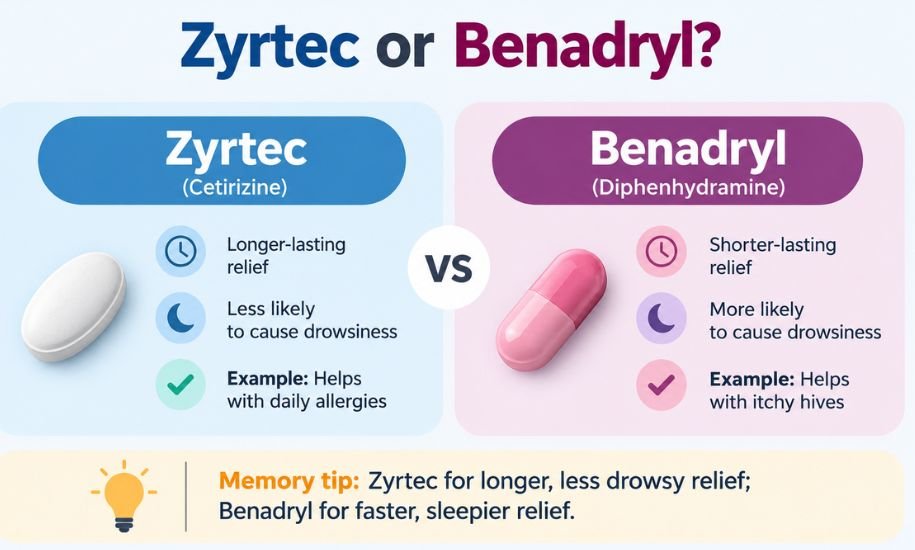
When dealing with allergies, itching, or hives, choosing between Zyrtec and Benadryl can be confusing. Both are antihistamines that help relieve allergy symptoms, but they contain different active ingredients and have different effects on the body. Zyrtec is generally less sedating and provides longer-lasting relief, while Benadryl is more likely to cause drowsiness and usually wears off sooner. Understanding their uses, side effects, and safety precautions can help you discuss the appropriate option with a healthcare professional, particularly if you are experiencing hives, a food allergy, or another allergic reaction.
Quick Answer
Zyrtec (cetirizine) and Benadryl (diphenhydramine) are both antihistamines, but Zyrtec generally causes less drowsiness and lasts longer, making it commonly used for routine allergy symptoms. Benadryl is more sedating and has a shorter duration of action. Neither medicine should replace epinephrine or emergency care for a severe allergic reaction.
Zyrtec or Benadryl: What’s the Difference?
The main difference between these medicines is their generation, duration of action, and likelihood of causing drowsiness. Zyrtec is a second-generation antihistamine, whereas Benadryl is a first-generation antihistamine. Both block histamine, a chemical involved in allergic reactions, but they affect the central nervous system differently.
| Feature | Zyrtec | Benadryl |
|---|---|---|
| Active ingredient | Cetirizine | Diphenhydramine |
| Drug generation | Second-generation | First-generation |
| Main use | Allergies and hives | Temporary allergy relief |
| Drowsiness | Less common, but possible | More common |
| Typical duration | Around 24 hours | Around 4–6 hours |
| Usual frequency | Often once daily | Often every 4–6 hours, depending on product |
| Central nervous system effects | Generally lower | More pronounced |
| Available forms | Tablets, chewables, liquids | Tablets, liquids and other formulations |
| Anticholinergic effects | Limited | More pronounced |
These are general characteristics. The appropriate dose, age restrictions, and frequency depend on the specific product label and individual circumstances.
Zyrtec is often used for seasonal allergies, year-round allergies, and chronic hives. Benadryl can provide temporary relief from symptoms such as sneezing, a runny nose, itching, and hives. However, its sedating and anticholinergic effects make it less suitable for some people, especially older adults.
PMC
+2
What Is Zyrtec?
Active ingredient: Cetirizine
Zyrtec is a brand-name allergy medicine containing cetirizine. It belongs to the second generation of antihistamines, which are designed to relieve allergy symptoms while generally causing fewer sedative effects than older antihistamines.
Cetirizine works by blocking H1 histamine receptors. Histamine contributes to common allergy symptoms, including sneezing, itchy eyes, a runny nose, and itchy skin. By limiting histamine’s effects, Zyrtec can help reduce these symptoms.
It is commonly used for:
- Seasonal allergic rhinitis, including hay fever
- Year-round allergies caused by indoor allergens
- Itchy, watery eyes and sneezing
- Itching associated with hives
- Chronic urticaria, under appropriate medical guidance
Many Zyrtec products are labelled for once-daily use, with relief that can last approximately 24 hours. However, cetirizine can still cause drowsiness, fatigue, dry mouth, or other side effects.
The FDA also warns that rare but severe itching can occur after stopping long-term daily cetirizine use. People who have been taking it regularly for months or longer should discuss long-term use and discontinuation with a healthcare professional.
FDA
+1
What Is Benadryl?
Active ingredient: Diphenhydramine
Benadryl is a brand-name antihistamine that contains diphenhydramine in many of its allergy products. It is a first-generation antihistamine that blocks H1 receptors and also produces anticholinergic effects.
Unlike cetirizine, diphenhydramine enters the brain more readily. This is one reason it is more likely to cause sleepiness, reduced alertness, and impaired coordination.
Benadryl is used for temporary relief of certain symptoms, including:
- Sneezing and a runny nose associated with allergies
- Itchy skin and hives
- Certain allergy-related symptoms
- Other uses specified on particular product labels
Some people experience drowsiness after taking Benadryl, but this does not mean it is an appropriate treatment for insomnia. Its sedative effects can be accompanied by impaired attention, dizziness, dry mouth, constipation, and other unwanted effects.
Taking more than the recommended amount can cause serious complications, including heart problems, seizures, coma, or death. The FDA advises people to follow the product’s Drug Facts label and avoid exceeding the recommended dose.
FDA
+1
How Do These Antihistamines Work?
Both medicines reduce the effects of histamine, a chemical released by the immune system during certain allergic responses.
When histamine binds to H1 receptors, it can contribute to itching, sneezing, watery eyes, a runny nose, and the raised welts associated with hives. Antihistamines block these receptors, helping relieve some of these symptoms.
The difference lies partly in their effects on the brain.
- Cetirizine: Primarily blocks peripheral H1 receptors and generally has less penetration into the brain, although drowsiness is still possible.
- Diphenhydramine: More readily crosses the blood-brain barrier and also blocks muscarinic receptors, contributing to sedation and anticholinergic effects.
Both can help manage certain allergy symptoms, but neither stops the underlying immune response to an allergen or reverses all the effects of a serious allergic reaction.
Zyrtec or Benadryl for Hives?
Hives, also called urticaria, are raised, itchy welts that can appear on different parts of the body. They may be triggered by foods, medicines, infections, insect bites, or other factors. Both cetirizine and diphenhydramine can relieve itching and reduce hives in some cases.
Cetirizine is commonly used for ongoing or recurring hives because it provides longer-lasting relief and is generally less sedating. Diphenhydramine can also relieve itching, but its drowsiness and anticholinergic effects may interfere with daily activities.
For chronic hives, a healthcare professional may recommend a regular treatment plan and investigate possible causes. Do not increase the dose or combine antihistamines without medical advice.
If hives occur alongside difficulty breathing, throat swelling, faintness, or other signs of anaphylaxis, seek emergency medical care immediately. Antihistamines are not a replacement for epinephrine in this situation.
PMC
+1
Is Zyrtec or Benadryl Better for an Allergic Reaction?
The appropriate medicine depends on the symptoms and severity of the reaction. For mild, isolated symptoms such as itching, sneezing, or a few hives, an antihistamine may provide relief.
Cetirizine is generally less sedating than diphenhydramine and is used for routine allergy management. Diphenhydramine may also relieve mild allergy symptoms, but it carries a greater risk of sedation and impaired coordination.
Warning: Severe allergic reactions
Anaphylaxis can cause:
- Difficulty breathing or wheezing
- Swelling of the tongue or throat
- Fainting or signs of dangerously low blood pressure
- Rapidly progressing symptoms affecting multiple body systems
Anaphylaxis is a medical emergency. Use prescribed epinephrine promptly and seek emergency medical care. Do not wait for an antihistamine to work. Both antihistamines have a limited role in anaphylaxis and must not delay epinephrine.
PMC
+2
Zyrtec or Benadryl for Food Allergies
Food allergies can cause different symptoms, including skin itching, hives, swelling, gastrointestinal discomfort, and potentially life-threatening anaphylaxis.
Antihistamines may relieve some mild, isolated symptoms, such as itching or hives, but they cannot reliably prevent a mild reaction from progressing or treat the dangerous breathing and circulatory problems associated with anaphylaxis.
People with diagnosed food allergies should follow their individual allergy action plans. If anaphylaxis is suspected, use prescribed epinephrine and seek emergency care. Neither Zyrtec nor Benadryl should be relied on as the primary treatment for a severe food-allergic reaction.
PMC
+1
Zyrtec vs Benadryl vs Claritin
Claritin is another commonly used antihistamine that contains loratadine. Like cetirizine, it is a second-generation antihistamine and is generally less sedating than diphenhydramine.
| Feature | Zyrtec | Benadryl | Claritin |
|---|---|---|---|
| Active ingredient | Cetirizine | Diphenhydramine | Loratadine |
| Generation | Second | First | Second |
| Typical duration | Around 24 hours | Around 4–6 hours | Around 24 hours |
| Drowsiness | Possible | More common | Usually less common |
| Common uses | Allergies and hives | Temporary allergy relief | Allergies and hives |
| Typical frequency | Once daily for many products | Depends on formulation | Once daily for many products |
All three medicines block histamine, but their sedative effects and individual responses differ. Cetirizine can cause drowsiness in some people, while loratadine is generally considered less sedating. Diphenhydramine has more pronounced sedative and anticholinergic effects.
The most appropriate option depends on symptoms, age, other medicines, medical history, and personal response. A pharmacist or healthcare professional can help identify a suitable choice.
Side Effects and Safety Precautions
Although both medicines are widely used, they can cause side effects and are not suitable for everyone.
| Zyrtec | Benadryl |
|---|---|
| Drowsiness | Drowsiness and sedation |
| Fatigue | Dizziness |
| Dry mouth | Dry mouth |
| Headache | Blurred vision |
| Nausea or digestive discomfort | Constipation |
| Occasionally, impaired alertness | Confusion or impaired coordination |
Cetirizine is usually less sedating, but it can still affect alertness. The FDA has also identified rare cases of severe itching after people discontinue long-term daily use.
FDA
+1
Diphenhydramine’s anticholinergic effects can be especially concerning for older adults, who may be more vulnerable to confusion, urinary retention, and falls. Taking excessive amounts can cause serious and potentially life-threatening complications.
FDA
+1
Before using either medicine, consider these precautions:
- Children: Follow age-specific product directions and seek professional advice when unsure.
- Older adults: Discuss the risks of diphenhydramine with a healthcare professional.
- Pregnancy or breastfeeding: Seek individualized advice before taking either medicine.
- Kidney or liver problems: Ask a healthcare professional whether dosage adjustments or alternative treatments are needed.
- Driving: Avoid driving or operating machinery if you feel drowsy or less alert.
- Other medicines: Check for interactions, particularly with medicines that cause sedation.
Always check the active ingredients in combination cold, flu, and allergy products to avoid accidentally taking duplicate medicines.
Can You Take Zyrtec and Benadryl Together?
Taking cetirizine and diphenhydramine together may increase drowsiness and other side effects. Combining two antihistamines is not generally necessary for routine allergy symptoms.
A healthcare professional may occasionally recommend a specific treatment plan involving more than one medicine, but you should not combine them independently or take extra doses to obtain faster relief.
If you accidentally take both, contact a pharmacist, doctor, or local poison information service for advice. The appropriate response depends on the amounts taken, timing, age, other medicines, and symptoms. Seek emergency medical attention for serious symptoms such as seizures, difficulty breathing, collapse, or inability to wake.
Frequently Asked Questions
1. Does Zyrtec work faster than Benadryl?
Both medicines can begin relieving allergy symptoms relatively quickly, but the time they take to work varies by person and formulation. The choice should not be based on speed alone. Duration of relief, drowsiness, the type of symptoms, and individual medical circumstances are also important.
2. Is Benadryl stronger than Zyrtec?
Neither medicine is universally stronger. Both block histamine, but they differ in their effects, duration, and likelihood of causing drowsiness. Diphenhydramine has more pronounced sedative effects, which should not be confused with greater effectiveness for every allergic symptom.
3. Can I take Zyrtec during the day and Benadryl at night?
Taking both within the same day may increase side effects, particularly sedation. Although a healthcare professional may recommend a specific schedule in certain circumstances, you should not combine them without medical advice.
4. Which causes more drowsiness, Zyrtec or Benadryl?
Benadryl generally causes more drowsiness because diphenhydramine enters the brain more readily and has additional anticholinergic effects. Zyrtec is usually less sedating, although it can still make some people sleepy or fatigued.
5. Can Zyrtec or Benadryl prevent anaphylaxis?
Neither medicine can reliably prevent or treat anaphylaxis. They may help relieve certain skin symptoms, but epinephrine is the first-line treatment for a severe allergic reaction. Anyone experiencing signs of anaphylaxis needs immediate emergency care.
Final Verdict: Zyrtec or Benadryl?
Zyrtec and Benadryl are both antihistamines, but they have different effects and uses. Cetirizine generally provides longer-lasting allergy relief with less drowsiness, while diphenhydramine is more sedating and has a shorter duration of action. The appropriate choice depends on the symptoms, individual health factors, and professional advice.
Understanding these differences can help readers make informed decisions about allergy medicines. For more clear, practical explanations of health-related terms and everyday questions, Grammarifyr aims to make complex information easier to understand. Always consult a qualified healthcare professional for personal medical guidance.
You may also Read : Emersed vs Immersed: Meaning, Differences, and Examples


One Comment