Specially or Especially: What’s the Difference?
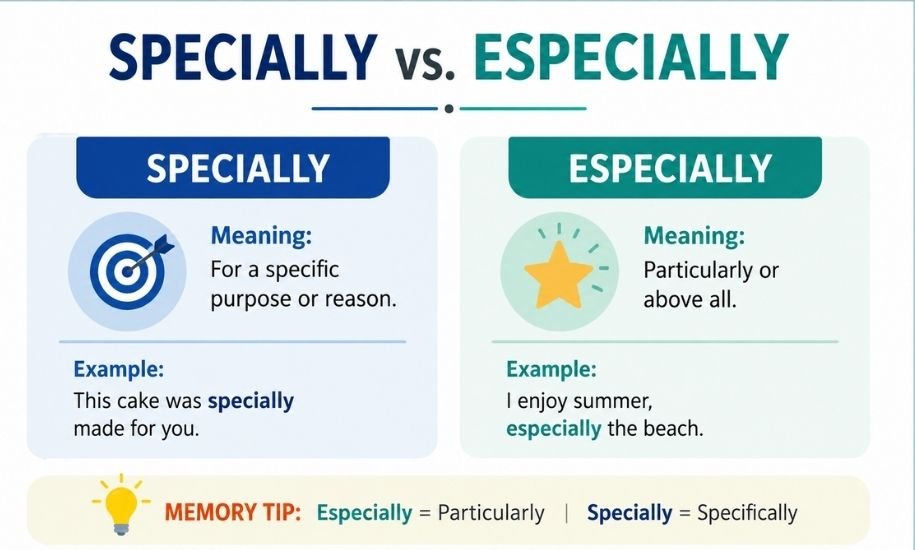
Choosing between specially and especially can be confusing because the two words look almost identical and both come from the adjective special. They are also sometimes used in similar contexts, which makes the distinction less obvious. However, there is a useful difference to remember. Especially usually means “particularly” or “above all,” while specially generally means “specifically” or “for a particular purpose.” Once you focus on the intended meaning rather than the spelling, choosing the right word becomes much easier.
Both “specially” and “especially” are correct words. Use especially when you mean “particularly” or “above all,” and use specially when you mean “specifically” or “for a particular purpose.” For example, “I especially like tea” means I particularly like it, while “This tea was specially prepared for the guests” emphasizes its specific purpose.
Specially vs. Especially: The Key Difference
The easiest way to distinguish the two is to replace each word with a simpler synonym.
| Word | Main meaning | Typical use | Example |
|---|---|---|---|
| Especially | Particularly; above all | Highlighting something | I enjoy winter, especially snowy days. |
| Specially | Specifically; for a particular purpose | Explaining intention or purpose | The room was specially designed for children. |
So, when you are asking “Is it especially or specially?”, first ask yourself what you mean.
If you mean “particularly,” choose especially.
If you mean “specifically” or “for this particular purpose,” choose specially.
There are some situations where either word can work, but their emphasis can differ.
What Does “Especially” Mean?
Especially is an adverb. It commonly means particularly, above all, or to an unusually high degree.
Use it when you want to single something out from a larger group or emphasize the degree of something.
Examples
- I like tropical fruit, especially mangoes.
- The second half of the movie was especially exciting.
- She was especially pleased with the results.
- This advice is especially useful for new writers.
In the first sentence, mangoes are being singled out as a particular favorite. In the last sentence, the advice is particularly useful to new writers.
Especially with adjectives
Especially can also strengthen an adjective or adverb:
- The road was especially narrow.
- He was especially careful with the equipment.
- This winter has been especially cold.
Here, especially means something close to particularly or unusually.
What Does “Specially” Mean?
Specially is also an adverb, but it commonly emphasizes a specific purpose, person, situation, or intention.
It often appears with words such as made, designed, prepared, created, developed, and selected.
Examples
- This jacket was specially designed for cold weather.
- The cake was specially made for her birthday.
- The software was specially developed for small businesses.
- He came specially to speak with the manager.
In each case, there is an idea of something being done for a particular reason or purpose.
This is why specially designed and specially made are such useful expressions to remember.
Especially or Specially in Common Sentences
The difference becomes clearer when you compare similar sentences.
“I especially like this book.”
This means:
I particularly like this book.
The speaker is emphasizing how much they like it.
“The book was specially made for children.”
This means:
The book was specifically made for children.
The focus is on its intended audience or purpose.
“She especially enjoyed the concert.”
She enjoyed the concert particularly or more than other things.
“She went specially to the concert.”
She went specifically for that purpose.
“This feature is especially useful.”
The feature is particularly useful.
“This feature was specially designed for beginners.”
It was specifically designed with beginners in mind.
These examples show why simply looking at the spelling is not enough. The intended meaning determines which adverb fits best.
When Can Both Words Be Used?
The distinction is useful, but it is not an absolute rule. Especially and specially can overlap in certain constructions.
For example:
- I bought this especially for you.
- I bought this specially for you.
Both can be understood to mean that the item was intended for you.
The difference is subtle. Specially strongly suggests specifically for you, while especially can place more emphasis on you in particular.
This overlap explains why some sentences cannot be divided into a simple “right” and “wrong” category.
A good approach is to consider the intended emphasis:
Particularly? → especially
Specifically/for a particular purpose? → specially
Why Are These Words So Easily Confused?
The confusion is understandable because both words are formed from the same adjective:
special → specially / especially
They also have overlapping meanings in some contexts. Historically and in modern usage, their meanings have developed close enough that certain sentences allow either form.
The important point for everyday writing is not to memorize a complicated rule. Instead, identify whether your sentence is emphasizing degree or selection (especially) or purpose and intention (specially).
Common Mistakes to Avoid
1. Using “specially” when you mean “particularly”
Incorrect for the intended meaning:
I specially enjoy classical music.
Better:
I especially enjoy classical music.
Here, especially means “particularly.”
2. Using “especially” when “specifically” is the intended meaning
Less precise:
The machine was especially designed for this task.
Clearer:
The machine was specially designed for this task.
The second sentence makes the purpose explicit.
That said, especially designed is not automatically grammatically impossible. Context can make it acceptable, which is why this distinction should be treated as a usage preference rather than an absolute ban.
3. Assuming “special” and “specially” are interchangeable
They are different parts of speech.
- special = adjective
- specially = adverb
For example:
This is a special occasion.
But:
This cake was specially prepared for the occasion.
4. Treating “especially” as a synonym for “special”
Especially is not an adjective. It modifies verbs, adjectives, adverbs, or entire expressions.
The weather is especially pleasant today.
Not:
The weather is specially pleasant.
The correct spelling is one word: especially.
Special or Especial: Which Is Correct?
Another related question is whether the correct word is special or especial.
Both are real English words, but special is overwhelmingly the normal choice in everyday English.
Special
Special is an adjective meaning unusual, distinctive, particularly important, or intended for a particular purpose.
Examples:
- We are planning a special dinner.
- This is a special opportunity.
- She has special training.
- They prepared a special menu.
Especial
Especial is also an adjective, but it is more formal and much less common in ordinary conversation.
It can mean particularly important, noteworthy, or distinctive.
For example:
The matter is of especial importance.
This is grammatically correct, but in ordinary modern writing, special importance or particular importance will usually sound more natural.
So if you’re wondering “Is it special or especial?”, use special in most everyday situations. Especial is best reserved for contexts where its formal tone is appropriate.
An Easy Way to Remember the Difference
Use this simple pair:
Especially = particularly
Specially = specifically
Try replacing the word in your sentence.
I especially like this painting.
→ I particularly like this painting. ✔
The painting was specially created for the exhibition.
→ The painting was specifically created for the exhibition. ✔
If particularly sounds natural, choose especially.
If specifically or for a particular purpose fits, choose specially.
This is not a perfect test for every possible sentence, but it works extremely well for ordinary writing.
Is It Especially or Specially? A Quick Reference
Here are some common constructions to make the distinction easier:
- especially important → particularly important
- especially useful → particularly useful
- especially difficult → particularly difficult
- especially good → particularly good
- specially designed → designed specifically for a purpose
- specially made → made specifically for someone or something
- specially prepared → prepared for a particular purpose
- specially selected → selected for a particular reason
When writing formal or professional English, this distinction can make your sentences more precise.
Frequently Asked Questions
Is “specially” a correct word?
Yes. Specially is a standard English adverb. It commonly means “specifically” or “for a particular purpose,” as in “specially designed equipment” or “a meal specially prepared for the guests.”
Is “especially” a correct word?
Yes. Especially is a standard adverb meaning “particularly,” “above all,” or “to an unusual degree.” For example, “I especially enjoyed the final chapter” means that the final chapter was particularly enjoyable.
Is it “especially made” or “specially made”?
Specially made is generally the clearest choice when you mean that something was made specifically for a person, purpose, or situation. “Especially made” can occur in English, but it may emphasize particularity rather than the specific purpose.
Can especially and specially be used interchangeably?
Sometimes. Expressions such as “especially for you” and “specially for you” can both be grammatical. However, especially generally emphasizes “particularly,” while specially more strongly conveys “specifically” or “for a particular purpose.”
Is “especial” the same as “special”?
They have closely related meanings, but special is the normal everyday word. Especial is a legitimate adjective that is more formal and less common, often meaning particularly important or noteworthy.
How can I remember which one to use?
Remember especially = particularly and specially = specifically. If you are emphasizing that something stands out, use especially. If you are explaining that something was done for a particular purpose, specially is usually the better choice.
The Bottom Line
Both specially and especially are correct, but they normally serve different purposes. Choose especially when you mean particularly or above all: “I especially enjoyed the meal.” Choose specially when you mean specifically or for a particular purpose: “The meal was specially prepared for the guests.”
For the related special or especial question, special is the natural everyday choice, while especial is a more formal alternative. When in doubt, the simple particularly vs. specifically test will usually point you in the right direction. That kind of practical distinction is exactly what Grammarify aims to make easier: know the difference and use the right words.
You may also Read : Koozie or Coozie: Meaning and Spelling Explained
One Comment