Cancelling or Canceling: Grammar and Spelling Guide
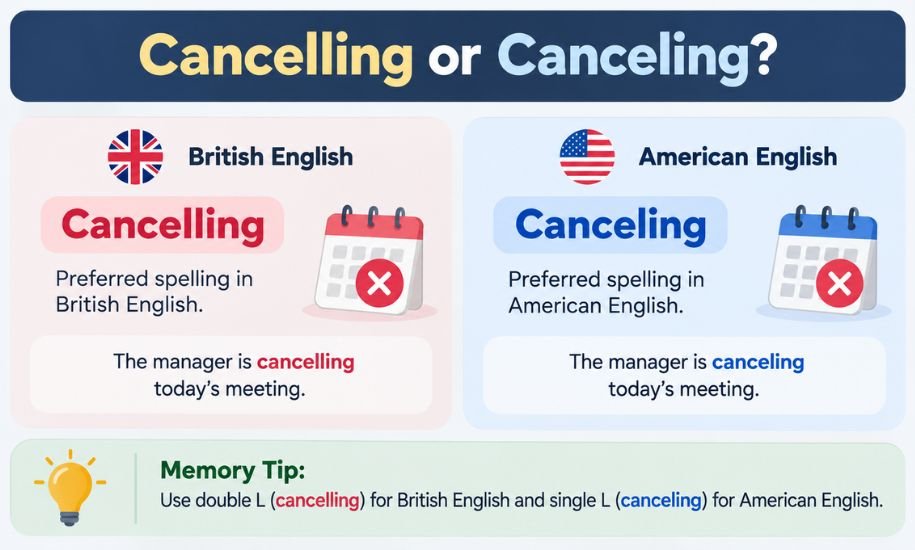
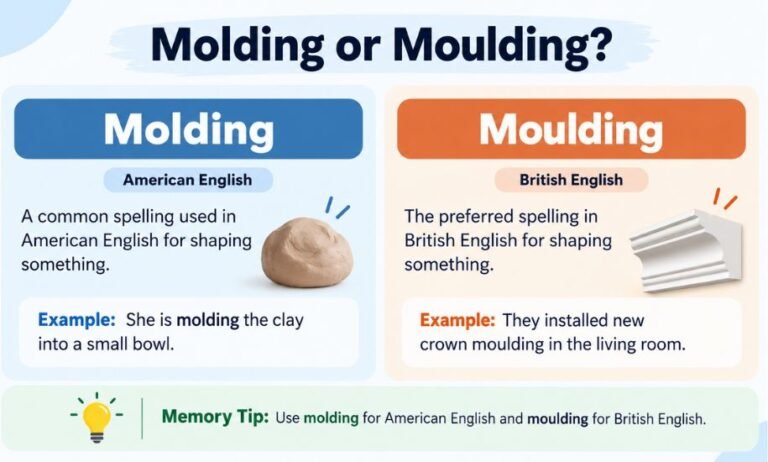
Have you ever wondered whether to write cancelling or canceling? Both spellings are correct, but the one you should use depends on the type of English you are writing. British English generally uses cancelling, with two Ls, while American English prefers canceling, with one L. Although the spelling differs, both words have exactly the same meaning and grammatical function. Understanding this small difference can help you write more confidently in emails, academic assignments, articles, and professional documents.
Quick Answer
Both cancelling and canceling are correct spellings. Cancelling is preferred in British English, while canceling is standard in American English. Both mean stopping something that was previously planned, arranged, or scheduled.
Cancelling or Canceling: What’s the Difference?
The main difference between these two words is regional spelling. British English typically doubles the final L when adding the -ing suffix to cancel, whereas American English generally keeps a single L.
| Feature | Cancelling | Canceling |
|---|---|---|
| Correct spelling | Yes | Yes |
| Preferred in | British English | American English |
| Meaning | Stopping something planned | Stopping something planned |
| Pronunciation | Same | Same |
| Part of speech | Gerund or present participle | Gerund or present participle |
| Past tense | Cancelled (UK) | Canceled (US) |
| Example | She is cancelling the meeting. | She is canceling the meeting. |
Neither spelling is universally incorrect. The choice depends on your intended audience and the spelling convention you follow.
What Does Cancelling Mean?
Cancelling is the British English spelling of the present participle or gerund form of the verb cancel. It means deciding to stop an event, appointment, agreement, service, or activity that was previously planned or arranged.
The word can be used in different grammatical situations, including continuous verb tenses and as a noun-like gerund.
Examples:
- She is cancelling her dentist appointment because she is feeling unwell.
- The airline is cancelling several flights due to severe weather.
- Cancelling the subscription will prevent further monthly payments.
- They are cancelling the event because of unexpected circumstances.
In each sentence, cancelling describes the act of stopping something that was expected to happen.
What Does Canceling Mean?
Canceling is the American English spelling of the same verb form. It has the same definition, pronunciation, and grammatical uses as cancelling. The only difference is the number of Ls.
Examples:
- I am canceling my gym membership next month.
- The company is canceling the scheduled conference.
- He considered canceling his hotel reservation.
- Canceling unnecessary appointments can free up your schedule.
In American English, canceling is generally preferred in books, newspapers, professional communication, and everyday writing.
Why Do British and American English Spell It Differently?
The difference comes from the spelling conventions that developed in British and American English.
British English generally doubles the final L in cancel when adding suffixes such as -ed and -ing. American English usually retains a single L in these forms when the final syllable is unstressed.
This explains why British English uses cancelled and cancelling, while American English generally uses canceled and canceling.
The same pattern appears in several other words:
| British English | American English |
|---|---|
| Travelling | Traveling |
| Travelled | Traveled |
| Modelling | Modeling |
| Modelled | Modeled |
| Labelled | Labeled |
| Labelling | Labeling |
These spelling patterns are useful to recognize, especially when writing for readers in different English-speaking countries.
Cancelling or Canceling in Grammar
Both spellings follow the same grammatical rules because they are forms of the verb cancel. The spelling changes according to regional convention, not according to tense or sentence structure.
1. Present continuous tense
Use the word with a form of be to describe an action that is happening now or around the present time.
- British: We are cancelling the booking.
- American: We are canceling the booking.
2. Gerund
A gerund is a verb ending in -ing that functions as a noun in a sentence.
- British: Cancelling the appointment was the right decision.
- American: Canceling the appointment was the right decision.
3. After certain verbs
The -ing form can follow verbs such as consider, avoid, and suggest.
- British: She considered cancelling her membership.
- American: She considered canceling her membership.
The grammatical structure remains identical in both varieties of English.
Cancelling, Canceling, Cancelled, and Canceled
The verb cancel has several related forms. Knowing how each is spelled can help you avoid mistakes when switching between tenses.
| Verb form | British English | American English |
|---|---|---|
| Base form | Cancel | Cancel |
| Present participle | Cancelling | Canceling |
| Past tense | Cancelled | Canceled |
| Past participle | Cancelled | Canceled |
| Noun | Cancellation | Cancellation |
Examples:
- Present: I cancel my appointment every year.
- British past: She cancelled the reservation yesterday.
- American past: She canceled the reservation yesterday.
- British continuous: They are cancelling the event.
- American continuous: They are canceling the event.
One important detail is that cancellation is conventionally spelled with two Ls in both British and American English. Although cancelation exists as a less common variant, cancellation is the standard choice for most writing.
Cancelling or Canceling: Examples in Sentences
Seeing both spellings in natural sentences makes it easier to understand how they work.
British English examples:
- The manager is cancelling today’s meeting because of an emergency.
- I received an email confirming the cancellation of my flight.
- She apologised for cancelling our dinner plans at short notice.
- The school is cancelling outdoor activities because of heavy rain.
American English examples:
- The manager is canceling today’s meeting because of an emergency.
- I received an email confirming the cancellation of my flight.
- She apologized for canceling our dinner plans at short notice.
- The school is canceling outdoor activities because of heavy rain.
Notice that other words, such as apologised and apologized, may also differ according to regional spelling conventions. When writing an entire article, it is useful to maintain one consistent style.
Noise Cancelling or Noise Canceling?
Both noise cancelling and noise canceling are correct expressions. The preferred spelling depends on the English variety being used.
- Noise cancelling: Common in British English.
- Noise canceling: Common in American English.
Both refer to technology that reduces unwanted background sounds, particularly in headphones, earbuds, and other audio equipment.
Examples:
- British English: These headphones have advanced noise cancelling technology.
- American English: These headphones feature active noise canceling technology.
When referring to a particular product, it is also sensible to follow the spelling used in its official product name.
Common Mistakes to Avoid
Although both forms are correct, writers can still make mistakes when using them.
- Mixing regional spellings: Using cancelling in one paragraph and canceling in another can make an article inconsistent. Choose the spelling that matches your audience.
- Assuming one spelling is always wrong: The double-L version is not a spelling mistake in British English, and the single-L version is not a mistake in American English.
- Confusing the verb with the noun: Cancelling and canceling are verb forms, while cancellation is a noun.
- Misspelling related forms: Remember that cancelled is standard in British English, while canceled is standard in American English.
- Changing spelling within formal documents: In academic papers, business reports, and published articles, follow the required style guide consistently.
How to Remember the Correct Spelling
A simple way to remember the difference is to associate the number of Ls with the regional spelling convention.
LL
British English: Cancelling
Remember the double L in cancelling and cancelled.
L
American English: Canceling
Remember the single L in canceling and canceled.
If you are unsure which form to use, consider where your readers are based. For a British audience, use cancelling. For an American audience, use canceling. If you are following a publication’s style guide, that guide should take priority.
Frequently Asked Questions
1. Is it cancelling or canceling?
Both are correct. Cancelling is the preferred spelling in British English, while canceling is the standard spelling in American English. They have the same meaning and grammatical function, so your choice should depend on your audience or preferred spelling convention.
2. Is cancelling British or American English?
Cancelling is the preferred British English spelling. It is also used in countries that generally follow British spelling conventions, such as Australia and New Zealand. American English typically uses canceling with one L.
3. Is canceling grammatically correct?
Yes, canceling is grammatically correct and is the standard American English spelling. It is the present participle or gerund form of cancel. It can be used in continuous tenses, such as “I am canceling my appointment,” or as a gerund, such as “Canceling the order was necessary.”
4. Is cancellation spelled with one L or two?
Cancellation is normally spelled with two Ls in both British and American English. Although cancelation is an accepted variant, it is much less common. For most formal and everyday writing, cancellation is the appropriate choice.
5. Is it canceled or cancelled in AP style?
The Associated Press (AP) generally uses American English spelling, so canceled is the preferred form. Similarly, AP style uses canceling with one L. Writers following AP style should use these forms consistently.
6. Are cancelling and canceling pronounced differently?
No. Cancelling and canceling are pronounced the same way. The difference is purely in spelling, so both forms sound identical when spoken.
Final Verdict: Cancelling or Canceling?
Both cancelling and canceling are correct, and neither changes the meaning of a sentence. Use cancelling when writing in British English and canceling when following American English conventions. The key is to remain consistent throughout your writing. Understanding this distinction helps you choose the right spelling for your audience, and Grammarifyr makes it easier to recognize these small but important differences in English.
You may also Read : Requestor or Requester: Difference in UK English
One Comment