Catalog or Catalogue: US vs UK English Explained
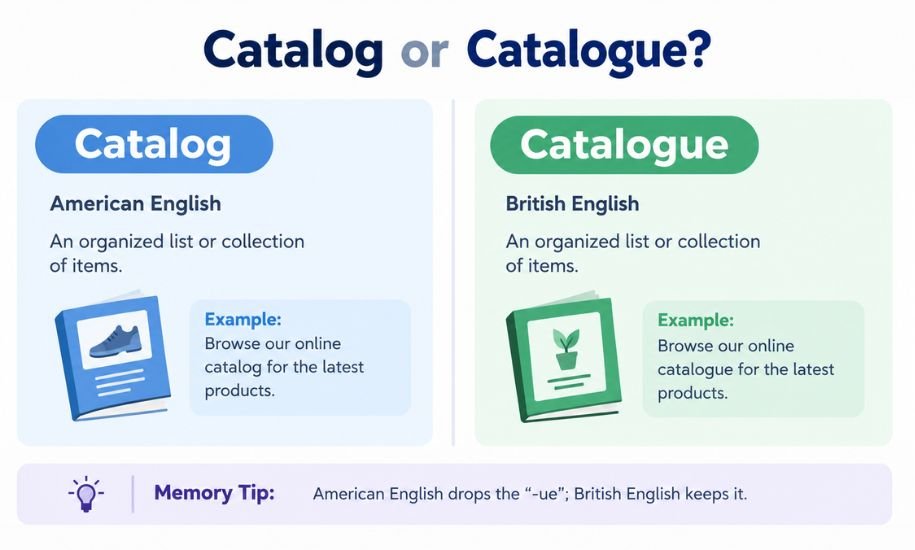
The words catalog and catalogue often cause confusion because they have the same meaning but different spellings. The difference is mainly regional: American English generally uses the shorter catalog, while British English traditionally uses catalogue. Both forms are legitimate, so choosing between them depends on the variety of English you are writing in and, most importantly, staying consistent. This distinction also appears in related forms such as cataloging/cataloguing and cataloged/catalogued.
Catalog and catalogue are both correct. Catalog is the standard spelling in American English, while catalogue is preferred in British English and is also common in other varieties influenced by British usage. They have the same basic meaning.
Catalog vs Catalogue: The Key Difference
There is no difference in meaning between the two spellings when they are used in the same context. The distinction is primarily one of regional spelling.
| Feature | Catalog | Catalogue |
|---|---|---|
| Correct spelling? | Yes | Yes |
| Main variety | American English | British English |
| Meaning | An organized list or collection | An organized list or collection |
| Common examples | Product catalog, library catalog | Product catalogue, library catalogue |
| Verb form | To catalog | To catalogue |
| Related form | Cataloging | Cataloguing |
For example:
- US English: The company published its new product catalog.
- UK English: The company published its new product catalogue.
Neither sentence is grammatically wrong. The spelling simply follows a different English convention.
What Does “Catalog” Mean?
Catalog is a noun meaning an organized list of items, usually with information about each one. It can refer to products, books, courses, artworks, services, or other collections.
The word can also function as a verb, meaning to create, organize, or record items in a catalog.
Examples as a noun
- I ordered the latest furniture catalog.
- The library’s online catalog contains thousands of books.
- You can find the available courses in the university catalog.
- The museum released a catalog of the exhibition.
Examples as a verb
- The librarian cataloged the new books.
- We need to catalog these historical documents.
- The company is cataloging its inventory.
In American English, the shorter catalog spelling is standard in both noun and verb uses.
What Does “Catalogue” Mean?
Catalogue has the same basic meaning as catalog. It is the spelling traditionally preferred in British English.
A catalogue can be a printed publication, a digital list, or a structured record of items. Like catalog, it can also be used as a verb.
Examples as a noun
- The retailer sent customers a Christmas catalogue.
- I searched the library catalogue for the book.
- The gallery produced an exhibition catalogue.
- The university’s course catalogue is available online.
Examples as a verb
- The archivist catalogued the photographs.
- Staff are cataloguing the museum’s collection.
- The books were carefully catalogued by subject.
The extra -ue does not create a different meaning. It is simply part of the British spelling.
Why Are These Spellings Different?
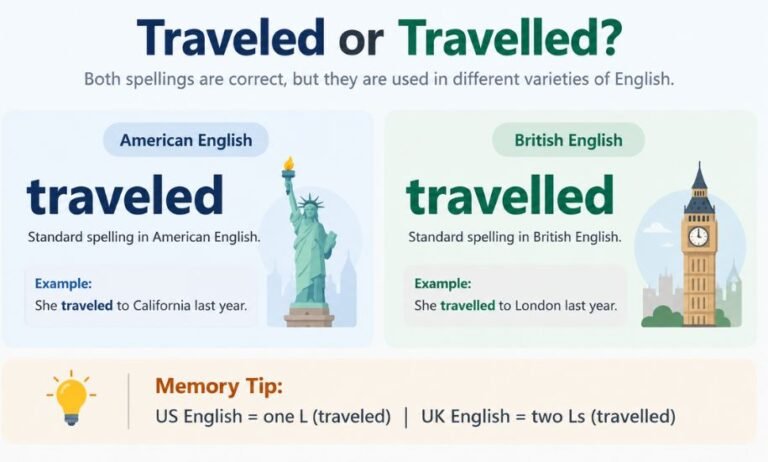
The difference reflects a broader pattern between American and British English spelling.
American English often uses shorter spellings in words that traditionally end in -ogue, while British English frequently retains -ogue or -ogue/-ue spellings.
Other familiar examples include:
- catalog / catalogue
- dialog / dialogue
- analog / analogue
However, spelling conventions can vary from word to word, so it is better not to assume that every -ogue word automatically follows exactly the same pattern.
For this particular word, catalog is firmly established in American English, while catalogue remains the conventional British form.
When Should You Use “Catalog”?
Choose catalog when your writing follows American English conventions.
This is especially appropriate for content intended for readers in the United States or for organizations that use American spelling.
For example:
Please check our online catalog for current prices.
The library has updated its catalog.
The software includes a searchable product catalog.
Using catalog consistently makes the spelling fit naturally with other American forms such as color, center, and organization.
When Should You Use “Catalogue”?
Use catalogue when you are writing in British English.
For example:
Please check our online catalogue for current prices.
The library has updated its catalogue.
The retailer published a new spring catalogue.
The spelling is also familiar in other English-speaking regions that traditionally follow British spelling conventions.
The important principle is consistency. If the rest of your document uses British spelling, catalogue is usually the better choice. If it uses American spelling, choose catalog.
Catalog or Catalogue in Different Contexts
Both forms can appear in many different situations.
Retail
A product catalog/catalogue contains information about products offered by a company.
US: Browse our product catalog.
UK: Browse our product catalogue.
Libraries
A library catalog/catalogue organizes information about books and other resources.
US: Search the library catalog.
UK: Search the library catalogue.
Education
Universities and colleges may publish a course catalog/catalogue containing information about programs and courses.
US: The course catalog lists all undergraduate programs.
UK: The course catalogue lists all available modules.
Museums and galleries
An exhibition may have a printed or digital catalog/catalogue describing the works displayed.
US: The exhibition catalog includes photographs of the artwork.
UK: The exhibition catalogue includes photographs of the artwork.
The context does not determine which spelling is correct. Your chosen variety of English does.
Cataloging or Cataloguing?
The spelling difference continues when the word becomes a present participle or gerund.
In American English:
cataloging
In British English:
cataloguing
Examples:
- The archivist is cataloging the documents.
- The archivist is cataloguing the documents.
The same regional pattern appears in the past tense:
- American: cataloged
- British: catalogued
For formal writing, use the form that matches the spelling convention of the rest of your text.
Common Mistakes to Avoid
1. Treating “catalogue” as a misspelling
It is not a misspelling. Catalogue is a standard English word, particularly in British English.
2. Treating “catalog” as universally wrong
Likewise, catalog is not an incorrect shortened form. It is the standard American spelling.
3. Mixing regional conventions
A document can technically contain both spellings, but switching between American and British conventions without a reason can make the writing look inconsistent.
For example, if you are writing American English, prefer:
The online catalog contains information about the center.
Rather than mixing conventions throughout the same document.
4. Changing the spelling inside a quotation or official name
If you are reproducing an organization’s official title, publication title, or quotation, retain its original spelling rather than changing it simply to match your preferred regional convention.
5. Assuming the spelling changes the pronunciation or meaning
The two forms have the same fundamental meaning. The difference is primarily orthographic and regional, not semantic.
A Simple Way to Remember the Difference
Think of the final letters:
US English → catalog
British English → catalogue
A useful visual rule is:
American English often drops the “-ue”; British English keeps it.
This is only a memory aid, not a universal rule for every English word. For this particular word, however, it makes the distinction easy to remember.
Which Spelling Should You Choose?
The best choice depends on your audience.
If you are writing for an American audience, use catalog.
If you are writing for a British audience, use catalogue.
If your website has an established spelling style, follow that style throughout your content. Consistency is more important than trying to use both spellings equally.
For example, an American-focused article might use:
Our online catalog contains product information, prices, and availability.
A British-focused version could say:
Our online catalogue contains product information, prices, and availability.
Both are perfectly understandable and correct within their respective conventions.
Frequently Asked Questions
Is “catalog” or “catalogue” correct?
Both are correct. Catalog is the standard American English spelling, while catalogue is the traditional British English spelling. The choice should depend on the variety of English you are using.
Is “catalogue” British English?
Yes. Catalogue is the standard traditional spelling in British English. It is also used in other regions and contexts influenced by British spelling conventions.
Is “catalog” American English?
Yes. Catalog is the standard American English spelling. American English commonly uses the shorter form without the final -ue.
Do catalog and catalogue have different meanings?
No. In ordinary usage, they have the same meaning. Both can refer to an organized list or publication containing information about products, books, courses, artworks, or other items.
Is “cataloging” or “cataloguing” correct?
Both are correct depending on regional English. Cataloging is the American English spelling, while cataloguing is the British English spelling.
Should I use both spellings in the same article?
Usually, no. Choose the spelling that matches your target variety of English and use it consistently. You can mention the alternative spelling when explaining the regional difference.
Final Verdict: Catalog or Catalogue?
Catalog and catalogue are both correct spellings. Use catalog for American English and catalogue for British English. The difference does not change the word’s basic meaning, so the key is simply to identify your audience and maintain a consistent spelling style. For clear explanations of confusing English words and practical usage guidance, Grammarifyr helps readers know the difference and use the right words.
You may also Read : Allie or Ally: Meaning and Correct Usage
One Comment