75 Ways to Say Hello: Different, Funny, Friendly & Professional Greetings
Saying “hello” is simple, but the best greeting depends on who you’re talking to, where you are, and the tone you want to create. Ways to say hello can range from a quick “Hey!” with a friend to a more polished “Good morning” at work.
Below, you’ll find different ways to say hello, including casual, friendly, professional, creative, and funny ways to say hello. The goal isn’t to replace “hello” every time, but to help you choose a greeting that sounds natural for the moment.
Ways to Say Hello
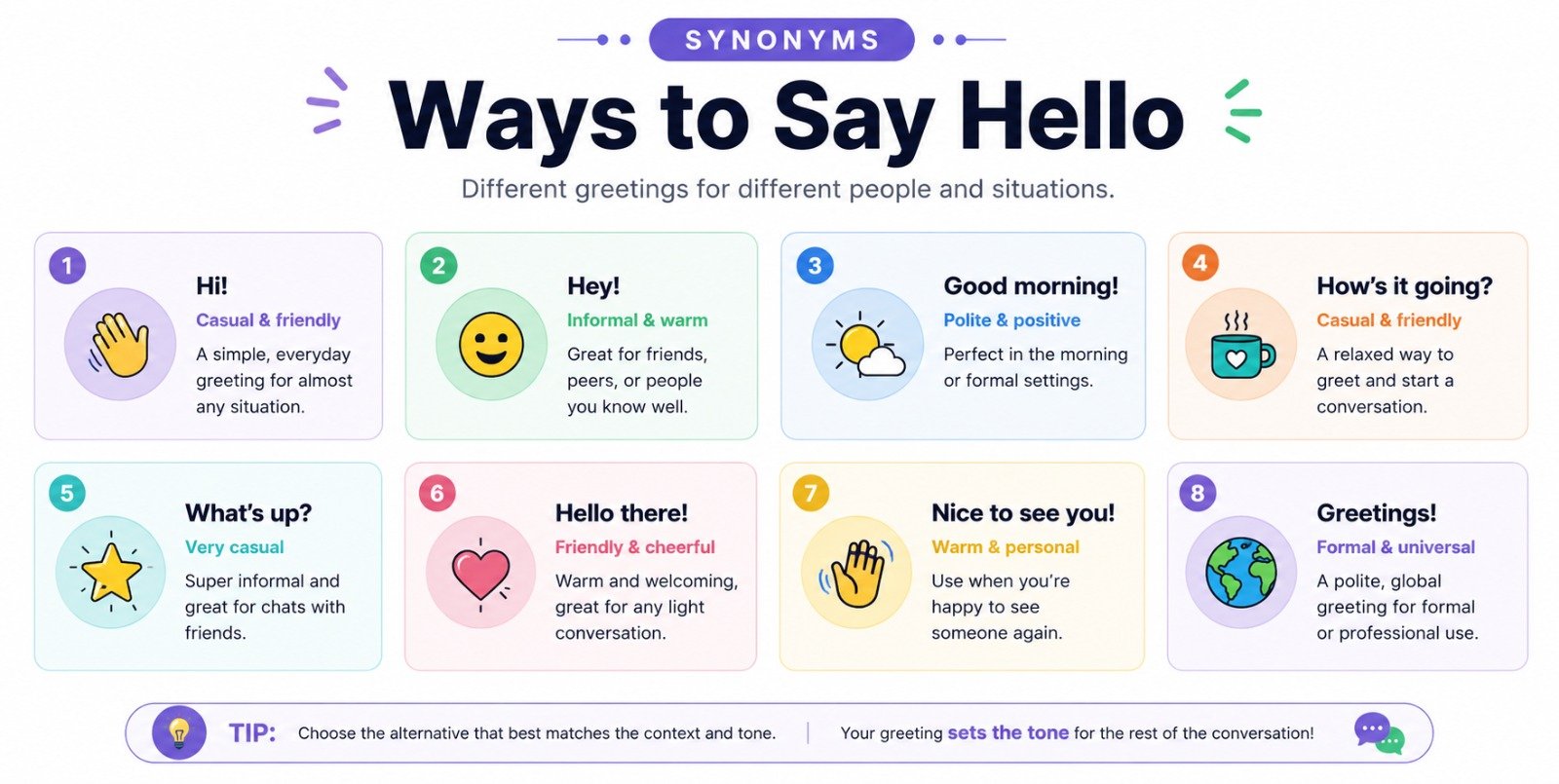
Here are some of the most natural alternatives to “hello” in everyday English. Some are almost interchangeable with “hello,” while others also begin a conversation by asking about the other person.
| Greeting | Tone | Best Used For |
|---|---|---|
| Hi | Neutral, casual | Everyday conversations |
| Hey | Casual, friendly | Friends, coworkers, acquaintances |
| Hi there | Warm, casual | General conversation |
| Hey there | Friendly | Informal conversations |
| Hello there | Warm, slightly playful | People you know or casual situations |
| Howdy | Playful, casual | Informal conversations |
| Hiya | Very casual, cheerful | Friends and familiar people |
| Good morning | Polite, neutral | Morning conversations |
| Good afternoon | Polite | Afternoon conversations |
| Good evening | Polite | Evening conversations |
| Greetings | Formal | Written or formal settings |
| What’s up? | Very casual | Friends and acquaintances |
| How’s it going? | Friendly | Casual conversation |
| Nice to see you | Warm | Someone you know |
| Long time no see | Friendly | Someone you haven’t seen recently |
Hi
“Hi” is probably the easiest alternative to “hello.” It’s short, natural, and works in most everyday situations.
Example:
“Hi, Sarah! How have you been?”
It’s casual enough for friends but neutral enough for many workplace interactions.
Hey
“Hey” feels more relaxed than “hello.” It’s especially common when greeting friends, coworkers, classmates, or people you already know.
Example:
“Hey, Mike! Are you heading to lunch?”
It can sound overly casual in some highly formal situations, so “Good morning” or “Hello” may be safer with a client or senior professional.
Hi there
“Hi there” adds a little warmth to the basic “hi.” It can sound friendly without becoming overly familiar.
Example:
“Hi there! Let me know if you need any help.”
Hey there
“Hey there” has a cheerful, conversational feel. It’s a good choice for informal messages and face-to-face conversations.
Example:
“Hey there! Haven’t seen you in ages.”
Hello there
“Hello there” is still perfectly natural, but it can sound slightly more expressive than a simple “hello.”
Example:
“Hello there! What brings you here?”
Different Ways to Say Hello Casually
Casual greetings are useful when talking to friends, classmates, neighbors, coworkers you know well, or people in relaxed social situations.
What’s Up?
“What’s up?” is an informal greeting that can also function as a genuine question about what someone is doing or how things are going.
Example:
“Hey, Jake, what’s up?”
A common response is simply “Not much,” so don’t assume the person expects a detailed answer.
How’s It Going?
“How’s it going?” is a friendly way to greet someone while asking generally how life or the current situation is going.
Example:
“Hey! How’s it going?”
It’s more conversational than simply saying “hello.”
How Are You Doing?
“How are you doing?” can work as both a greeting and a genuine question about someone’s well-being.
Example:
“Hi, Emma. How are you doing?”
How’s Everything?
This greeting is useful when you haven’t spoken to someone for a little while.
Example:
“Hey, Tom! How’s everything?”
What’s Going On?
“What’s going on?” is informal and conversational. Depending on tone, it can mean either “How are you?” or “What are you doing?”
Example:
“Hey, everyone. What’s going on?”
Yo!
“Yo!” is extremely casual and works best between friends or people with a relaxed relationship.
Example:
“Yo! Good to see you.”
It generally isn’t appropriate for formal emails, professional introductions, or serious occasions.
Friendly Ways to Say Hello
Sometimes you want your greeting to feel warmer than a basic “hi.”
Nice to See You
“Nice to see you” works especially well when you already know the person.
Example:
“Hey, Daniel! Nice to see you again.”
Good to See You
“Good to see you” is another warm and natural option.
Example:
“Good to see you! How have things been?”
Great to See You
“Great to see you” expresses a little more enthusiasm.
Example:
“Great to see you! It’s been too long.”
Long Time No See
“Long time no see” is an informal expression used when you haven’t seen someone for quite a while.
Example:
“Hey, long time no see! What have you been up to?”
It’s friendly rather than formal, so avoid it in a professional introduction unless you already have a relaxed relationship with the person.
Hey, Friend!
“Hey, friend!” is warm and personal. It fits texts, social messages, and conversations with people you know well.
Example:
“Hey, friend! How’s your week going?”
Professional Ways to Say Hello
Professional greetings need to sound respectful without becoming unnecessarily stiff. The safest choice depends on the workplace and your relationship with the recipient.
Good Morning
“Good morning” is one of the most useful professional greetings.
Example:
“Good morning, everyone. Thanks for joining the meeting.”
Good Afternoon
Use “Good afternoon” later in the day when you want a polite, professional greeting.
Example:
“Good afternoon, Mr. Wilson. It’s a pleasure to meet you.”
Good Evening
“Good evening” works for evening meetings, events, introductions, and other formal or polite situations.
Example:
“Good evening, everyone. Thank you for being here.”
Greetings
“Greetings” is more formal than “hi” or “hey.” It can work in formal writing, announcements, or situations where a neutral formal opening is appropriate.
Example:
“Greetings, everyone. We’re pleased to welcome you to the event.”
In ordinary workplace conversation, however, “Good morning” or “Hello” will usually sound more natural.
Hello, Everyone
“Hello, everyone” is useful when addressing a group.
Example:
“Hello, everyone. Let’s get started.”
Hello, Team
“Hello, team” can work in workplace messages, particularly when communicating with a familiar group.
Example:
“Hello, team. Here’s a quick update on today’s schedule.”
Ways to Say Hello in an Email
An email greeting should match your relationship with the recipient.
Hi [Name]
“Hi [Name]” is one of the safest choices for everyday professional emails.
Example:
“Hi James,
I’m writing to follow up on our conversation.”
Hello [Name]
“Hello [Name]” is slightly more formal while still sounding natural.
Example:
“Hello Maria,
Thank you for sending the information.”
Good Morning, [Name]
This can work well when you know the recipient will receive the message in the morning.
Example:
“Good morning, David. I wanted to confirm our meeting time.”
Dear [Name]
“Dear [Name]” is more formal and is useful for formal correspondence, official communication, or situations where a more traditional tone is appropriate.
Example:
“Dear Ms. Carter,
Thank you for your message.”
The greeting you choose should reflect the relationship rather than simply trying to sound more sophisticated.
Funny Ways to Say Hello
If you’re greeting a close friend, humor can make an ordinary conversation more entertaining. These funny ways to say hello are deliberately playful, so they aren’t suitable for every audience.
Ahoy!
“Ahoy!” is a playful nautical greeting.
Example:
“Ahoy, matey! Ready for the weekend?”
Howdy, Partner!
This has a deliberately Western, playful feel.
Example:
“Howdy, partner! What’s the plan today?”
Well, Hello There!
This can sound theatrical or intentionally dramatic.
Example:
“Well, hello there! Look who finally showed up.”
Look Who’s Here!
Use this with someone you know well, especially when their arrival is unexpected.
Example:
“Look who’s here! We were just talking about you.”
Hello, Stranger!
“Hello, stranger!” is a playful way to greet someone you haven’t seen for a while.
Example:
“Hello, stranger! It’s been forever.”
What’s Cooking?
“What’s cooking?” can be a playful way to ask what someone is doing or what’s happening.
Example:
“Hey, what’s cooking this weekend?”
What’s Shaking?
“What’s shaking?” is a very informal, playful greeting. It’s best reserved for relaxed conversations.
Example:
“Hey, Chris! What’s shaking?”
Hey, Superstar!
This exaggerated compliment can be funny when used with a friend.
Example:
“Hey, superstar! How’s your big day going?”
Creative Ways to Say Hello
Creative greetings are useful when a standard “hi” feels too predictable.
Hello, You!
“Hello, you!” is warm and playful, especially in texts.
Example:
“Hello, you! I’ve been meaning to call.”
There You Are!
This works when someone arrives, appears online, or finally responds.
Example:
“There you are! I was wondering where you’d gone.”
Look Who Decided to Show Up
This is humorous but can sound sarcastic, so use it only with people who understand your sense of humor.
Example:
“Look who decided to show up! We saved you a seat.”
Fancy Seeing You Here
This is a playful greeting for an unexpected meeting.
Example:
“Fancy seeing you here! What are the odds?”
Well, Look at You!
Depending on the context, this can be complimentary, surprised, or teasing.
Example:
“Well, look at you! That outfit is fantastic.”
Ways to Say Hello to a Friend
Friends usually allow for much more relaxed language. You can use a simple greeting or turn it into an invitation to talk.
Hey, Buddy!
“Hey, buddy!” sounds warm and informal.
Example:
“Hey, buddy! Want to grab some coffee?”
Hey, Man!
“Hey, man!” is a casual greeting often used among friends.
Example:
“Hey, man! How’ve you been?”
Hey, You!
“Hey, you!” is short, playful, and familiar.
Example:
“Hey, you! What are you doing tonight?”
Good to Hear From You
This is especially useful when a friend contacts you after some time.
Example:
“Good to hear from you! How have things been?”
Ways to Say Hello in a Text Message
Texting gives you more freedom to be brief and playful.
Hey!
Simple and natural.
Example:
“Hey! Are you free later?”
Hiii!
The extra letters make the greeting feel more enthusiastic or playful. It’s informal and mainly suited to texting.
Example:
“Hiii! How was your day?”
Heyyy!
Like “Hiii,” this is intentionally casual and expressive.
Example:
“Heyyy! I have something to tell you.”
Morning!
“Morning!” is a relaxed shortened version of “Good morning.”
Example:
“Morning! Did you sleep well?”
You Up?
“You up?” is extremely informal and context-dependent. It should generally be reserved for close relationships.
Example:
“You up? I just thought of something funny.”
Ways to Say Hello to Someone You Haven’t Seen in a Long Time
A normal “hello” can feel a little flat when you reconnect with someone after months or years.
Long Time No See!
Example:
“Long time no see! What have you been up to?”
It’s Been a While!
Example:
“Hey! It’s been a while. How are things?”
Great to See You Again!
Example:
“Great to see you again! We should catch up soon.”
How Have You Been?
This greeting naturally opens the door to a longer conversation.
Example:
“Hi, Sarah! How have you been since we last talked?”
What Have You Been Up To?
This is informal and shows genuine interest in the person’s life.
Example:
“Hey, Alex! What have you been up to lately?”
Ways to Say Hello to a Group
When greeting several people, the best phrase depends on whether the setting is social or professional.
Hi, Everyone!
Friendly and broadly useful.
Example:
“Hi, everyone! Thanks for coming.”
Hello, Everyone!
A little more neutral than “Hi, everyone.”
Example:
“Hello, everyone. Let’s begin.”
Hey, Everyone!
Casual and energetic.
Example:
“Hey, everyone! Ready for the game?”
Hi, Guys!
This is common in informal speech, although “everyone,” “all,” or “team” can be more inclusive depending on the group.
Example:
“Hi, everyone! I’ve got a quick update.”
Morning, Everyone!
A relaxed workplace or group greeting for the morning.
Example:
“Morning, everyone! Hope you’re all doing well.”
Other Ways to Say Hello Without Saying “Hello”
Sometimes the best greeting isn’t a direct synonym at all. You can greet someone by referring to the time, asking how they are, acknowledging their arrival, or expressing pleasure at seeing them.
Good Morning
A time-specific greeting that is polite and natural.
How Are You?
A greeting that also asks about the person’s well-being.
Nice to Meet You
Use this when you’re meeting someone for the first time.
Example:
“Hi, I’m Daniel. Nice to meet you.”
Welcome!
Use “welcome” when someone arrives at a place, event, community, or group.
Example:
“Welcome! We’re glad you could join us.”
Pleasure to Meet You
This is more formal than “Nice to meet you.”
Example:
“It’s a pleasure to meet you, Dr. Lee.”
Glad to See You
This expresses warmth and works best with someone you already know.
Example:
“Glad to see you! How was your trip?”
Which Greeting Should You Choose?
The best greeting depends less on finding a clever synonym and more on understanding the situation.
For friends: “Hey,” “What’s up?” “Yo,” and “Hey, buddy!” are natural choices.
For coworkers: “Hi,” “Hey,” “Good morning,” and “Hello, everyone” are generally safe depending on the workplace culture.
For clients: “Hello,” “Good morning,” or “Good afternoon” usually creates a more professional impression.
For someone you’ve just met: “Hello,” “Hi,” “Nice to meet you,” or “It’s a pleasure to meet you” can work well.
For a funny text: “Ahoy!”, “Hello, stranger!”, or “Look who’s here!” can add personality when the relationship supports humor.
For formal communication: “Good morning,” “Good afternoon,” “Dear [Name],” or another appropriate formal opening is usually better than slang.
A greeting isn’t always a direct synonym
This distinction matters. “What’s up?” is not simply another word for “hello”; it also asks what is happening. “Nice to meet you” is specifically connected with an introduction. “Welcome” acknowledges someone’s arrival rather than simply replacing “hello.”
Likewise, “Yo!” and “Greetings” occupy very different points on the formality scale. Choosing an expression because it appears on a list of alternatives doesn’t mean it will sound natural in every situation.
Common Mistakes When Choosing a Greeting
Using Slang in a Formal Situation
“Yo!” may be perfectly natural between friends but inappropriate when greeting a client for the first time.
Making a Professional Greeting Too Formal
“Greetings and salutations” can sound theatrical or old-fashioned in an ordinary workplace email. A simple “Hello” or “Good morning” is often more natural.
Using Humor With the Wrong Audience
“Look who finally showed up!” can make a close friend laugh but could sound rude to a manager, customer, or stranger.
Treating Every Greeting as Interchangeable
“Good morning,” “What’s up?” and “Nice to meet you” all perform greeting-related functions, but they don’t communicate exactly the same thing.
Forgetting the Relationship
The same person may need different greetings in different settings. You might say “Hey!” to a coworker in the hallway but use “Good afternoon” when formally introducing that coworker to a client.
Frequently Asked Questions
What are some different ways to say hello?
Common alternatives include hi, hey, hi there, hey there, howdy, hiya, good morning, good afternoon, greetings, what’s up?, how’s it going?, nice to see you, and long time no see. The best choice depends on how formal or casual the situation is.
What is a funny way to say hello?
For friends, you could say “Ahoy!”, “Howdy, partner!”, “Hello, stranger!”, “Look who’s here!”, “What’s cooking?” or “Hey, superstar!” Choose humor that matches your relationship with the person.
What is another word for hello?
There isn’t one perfect replacement in every situation. Hi is the closest everyday alternative, while hey, greetings, good morning, howdy, and hiya work in different contexts and tones.
How do you say hello casually?
Use expressions such as “Hi,” “Hey,” “Hi there,” “Hey there,” “What’s up?” “How’s it going?” or “Yo!” The last few are increasingly informal, so they’re better suited to friends and familiar people.
What is a professional way to say hello?
“Hello,” “Good morning,” “Good afternoon,” and “Good evening” are reliable professional choices. In email, “Hi [Name]” is also widely appropriate when the workplace culture is relatively relaxed.
How can I say hello in a text?
Text messages allow for short, informal greetings such as “Hey!”, “Hi!”, “Hiii!”, “Heyyy!”, “Morning!” or “What’s up?” Pick one that matches your relationship and the tone of the conversation.
What can I say instead of hello to someone I haven’t seen in a long time?
Try “Long time no see!”, “It’s been a while!”, “Great to see you again!”, “How have you been?” or “What have you been up to?” These expressions naturally encourage the conversation to continue.
Is “Howdy” a formal way to say hello?
No. “Howdy” is generally informal and playful. It can add personality to a casual conversation but isn’t normally the best choice for formal business communication.
Is “Hey” rude?
Not necessarily. “Hey” is a normal and friendly greeting in many casual situations. However, in a highly formal setting, “Hello” or a time-specific greeting such as “Good morning” may be more appropriate.
Final Thoughts
There are plenty of other ways to say hello, but the smartest choice isn’t always the most unusual one. Think about the person you’re addressing, the setting, your relationship, and whether you want to sound professional, friendly, playful, or relaxed. A simple “Hi” may be perfect in one situation, while “Good morning,” “Long time no see,” or a funny greeting works better in another.
That small choice can make a conversation feel more natural. Grammarifyr focuses on those practical differences so you can choose the right words without losing your natural voice.
You may also Read : Other Ways to Say “For Example”: 30+ Useful Alternatives
One Comment